

Reaching the summit of Mount Kilimanjaro is a personal achievement, but no climber reaches Uhuru Peak alone. Behind the journey is a mountain team that works from the first day of the climb until the final descent. Kilimanjaro climbing porters are an important part of this team. They carry camping equipment, food, cooking supplies, and other items needed on the mountain. They also help prepare camps and support the rest of the team throughout the trek. For many climbers, the hard work of porters is only noticed when they arrive at camp and find that everything is already prepared. Their work often happens behind the scenes, but it is essential to the whole Kilimanjaro experience.
Our Kilimanjaro porters are local Tanzanian mountain workers with experience on Mount Kilimanjaro. They understand the routes, camps, changing weather, and physical demands of working at high altitude. Every climb requires teamwork. Guides focus on leading and supporting climbers, cooks prepare meals, and porters help move the equipment and supplies needed by the team. The porter team is therefore not separate from the climb. They are part of the same mountain team working toward one goal: helping climbers complete their journey safely and successfully.
.jpeg)
The work of Kilimanjaro climbing porters starts before many climbers begin their daily hike. Porters help carry the equipment and supplies needed for the climb. They may also help organize the camp and prepare what the team will need after a long day on the trail.
Their responsibilities can include:
This work continues throughout the climb, from the lower slopes to the high-altitude camps.
A porter can have a very different day from a climber. While climbers are preparing for the day's hike, porters are already helping with equipment and supplies. During the trek, they carry the items needed at the next camp and work with the rest of the mountain team. After reaching camp, their work does not simply stop. They may help organize equipment, prepare the camp area, and support other members of the team. The following morning, the same routine begins again. This is why Kilimanjaro porter work is physically demanding. It requires strength, experience, and the ability to work in changing mountain conditions for several days.
.jpeg)
The equipment carried by porters depends on the size of the climbing group, the route, and the services included in the climb. Common items include camping equipment, food, cooking supplies, tents, and other group equipment. Porters help move these supplies from one camp to another, making it possible for climbers to carry only the personal items they need for the day's hike. Carrying equipment up Mount Kilimanjaro is not easy. The trails become steeper and the air becomes thinner as the altitude increases. This makes the work of experienced porters especially important.
One of the most important parts of a porter's job happens at camp. After several hours of walking, climbers need time to rest, eat, drink, and prepare for the next day. The mountain team works to make the camp ready for them. Porters help move and organize equipment so that the climbing group can settle in after the day's hike. This support can make a big difference, especially during the higher sections of the mountain when the cold, altitude, and long hiking days become more challenging.
The people who work on Mount Kilimanjaro deserve proper care and respect. Porter welfare is an important part of responsible mountain tourism. Our porters are provided with proper food, suitable shelter, and the equipment needed for their work. Their working conditions should allow them to perform their responsibilities safely while supporting climbers throughout the trek. A good Kilimanjaro climb should not only focus on the person reaching the summit. It should also respect the people who work hard behind that achievement.
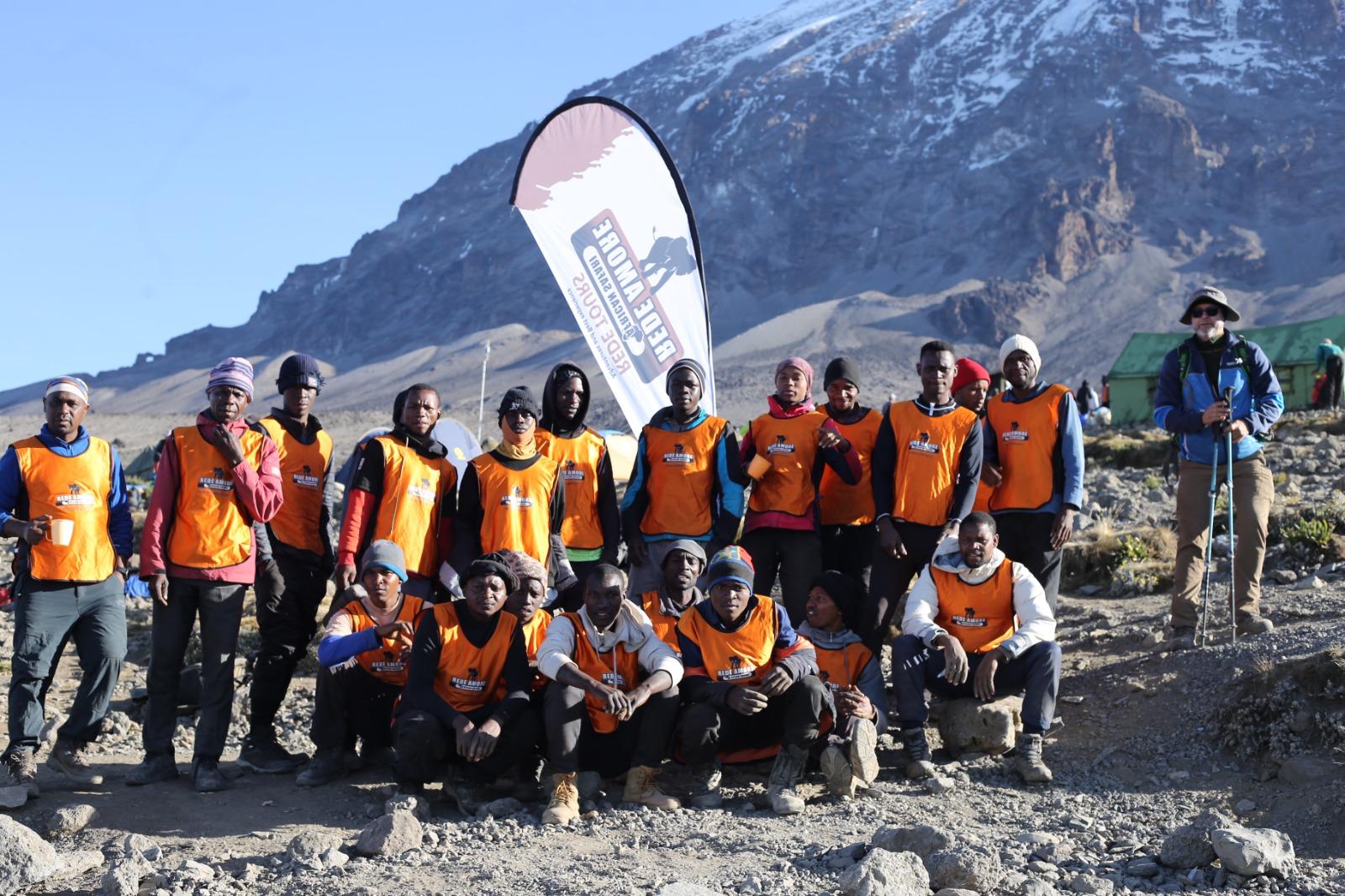
Working at high altitude requires energy. Porters need proper meals and enough rest to continue working during a multi-day Kilimanjaro climb. Food is an important part of looking after the mountain team. Suitable accommodation or camping arrangements are also provided according to the route and park requirements. Rest is equally important. A porter who is properly fed and rested is better prepared for the physical demands of the next day.
Mount Kilimanjaro has different weather conditions at different elevations. A climb can include warm conditions in the lower areas and freezing temperatures near the summit. Rain, wind, cold, and difficult trails can make porter work challenging. For this reason, Kilimanjaro climbing porters need suitable clothing and equipment for the conditions they may face. Proper equipment helps protect the mountain team and allows porters to carry out their work more safely. Responsible climbing means paying attention to the safety and well-being of everyone on the mountain.
Tipping is one-way climbers can show appreciation for the hard work of their mountain team. The recommended tip for a Kilimanjaro porter is US$10 per porter per day. This is normally given at the end of the climb as a thank-you for the porter’s work and support throughout the journey. Tipping is separate from the price of the Kilimanjaro climb. It is not a replacement for proper wages or working conditions. Instead, it gives climbers an additional way to recognize the effort of the porters who have supported them. A porter may spend several days carrying equipment, working around camp, and supporting the climbing team. A tip is therefore a meaningful way to say thank you for that effort.
It is easy to focus on the summit when planning a Kilimanjaro climb. However, reaching Uhuru Peak depends on much more than physical strength. The guide provides direction and mountain support. The cook prepares meals. The porters carry important supplies and help prepare camps. Every member of the team has a role. The work of Kilimanjaro climbing porters helps keep the climb organized from the trailhead to the summit and back down the mountain. When climbers look back at their Kilimanjaro experience, the porter team is an important part of the story.
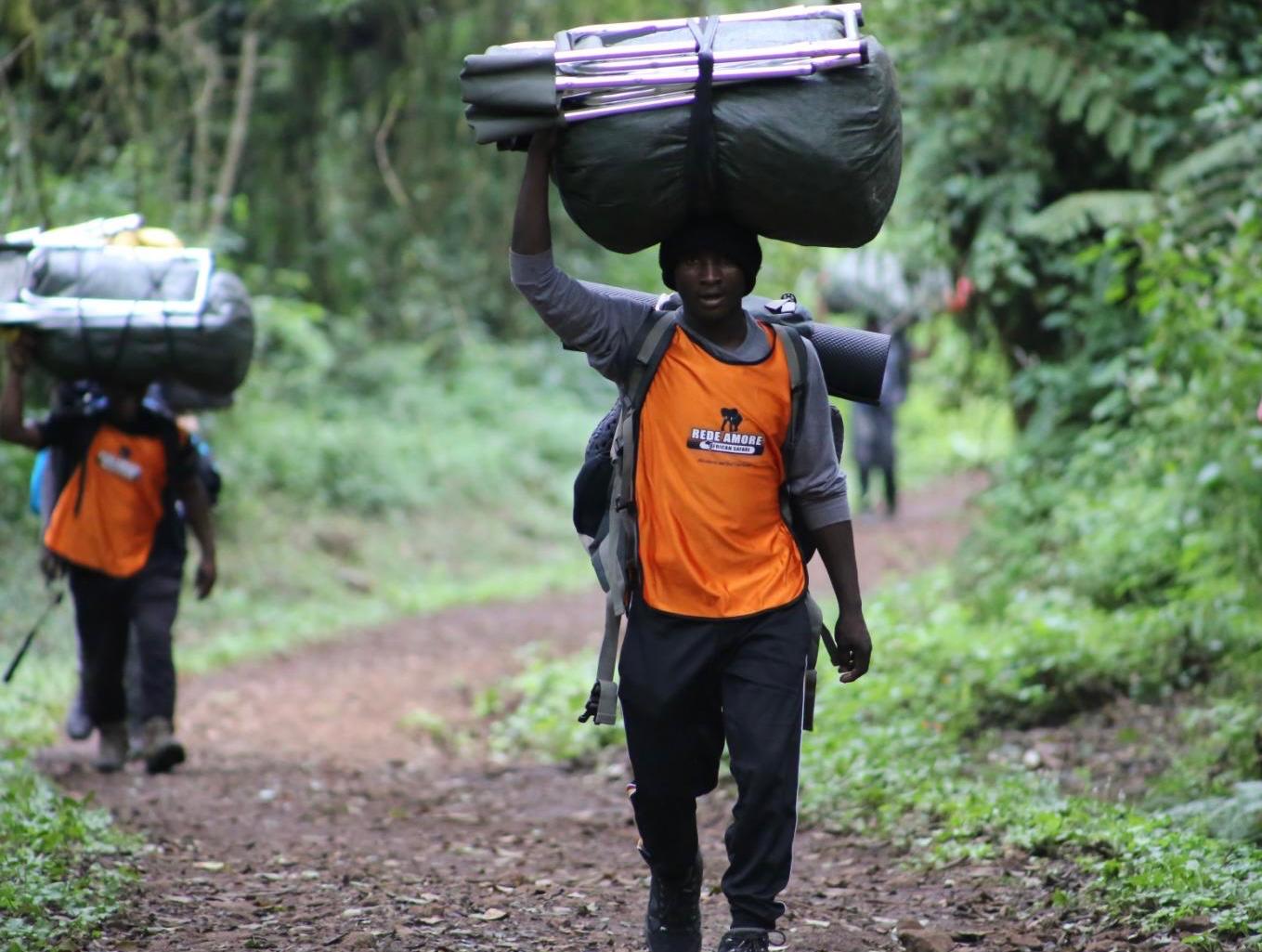
Kilimanjaro climbing creates employment for many people in Tanzania. Porters are an important part of this local tourism industry. Supporting local mountain workers allows tourism to provide income and opportunities for people and families in the communities around Mount Kilimanjaro. Choosing a responsible climbing team also means understanding where the support for your climb comes from and respecting the people who make that support possible.
A Kilimanjaro climb is more than a walk to the highest point in Africa. It is a journey supported by a team of local people who work together throughout the mountain experience. Our Kilimanjaro climbing porters carry essential supplies, help prepare camps, support the guides, and work hard to keep the climb organized. When you stand at Uhuru Peak at 5,895 meters, remember that your achievement is also connected to the people who helped you along the way. Choosing a climb with a well-supported local mountain team gives you the opportunity to experience Kilimanjaro while also respecting the people who work on the mountain. Kilimanjaro is climbed one step at a time, but every successful summit is supported by a team.
.jpeg)
Now that you know more about the people who support every Kilimanjaro climb, it is time to start planning your own adventure. Book your Mount Kilimanjaro climb today and experience the mountain with an experienced local team of guides, cooks, and Kilimanjaro climbing porters who will support you from the first day to the summit and back down. Whether you are planning to climb the Machame Route, Lemosho Route, Marangu Route, Rongai Route, or another Kilimanjaro route, we are ready to help you plan your trek. Contact us today to check availability, choose your Kilimanjaro route, and start planning your journey to Uhuru Peak.
For bookings and inquiries: