
The Marangu Route is the only Mount Kilimanjaro climbing route with permanent mountain huts, making it the most suitable option for travelers who prefer sleeping in a bed rather than a tent. It approaches Kilimanjaro from the southeast through Marangu Gate and reaches Uhuru Peak at 5,895 m (19,341 ft).
Marangu can be completed in 5 or 6 days, but the 6-day itinerary is the better choice for most climbers. The extra day is spent acclimatizing around Horombo Hut at approximately 3,720 m, giving your body more time to adjust before the summit attempt.
The route is often described as the “easiest” Kilimanjaro route because the trail is relatively gradual and well established. However, that does not mean it is the easiest route for reaching the summit. The main challenge on Marangu is altitude, and the shorter itinerary gives you less time to acclimatize.
TANAPA identifies Marangu as one of Kilimanjaro's ascending routes and confirms that the route has huts at Mandara, Horombo and Kibo.
| Feature | Marangu Route |
|---|---|
| Starting Gate | Marangu Gate |
| Starting Elevation | ~1,860 m / 6,100 ft |
| Summit | Uhuru Peak |
| Summit Elevation | 5,895 m / 19,341 ft |
| Duration | 5 or 6 days |
| Recommended Duration | 6 days |
| Distance | ~70–75 km / 43–47 miles round trip, depending on itinerary/measurement |
| Accommodation | Permanent mountain huts |
| Huts | Mandara, Horombo, Kibo |
| Approach | Southeast |
| Descent | Same Marangu Route |
| Difficulty | Moderate walking, challenging altitude |
| Technical Climbing | Not required |
| Highest Point Before Summit | Kibo Hut ~4,703 m |
| Summit Approach | Kibo Hut → Gilman's Point → Uhuru Peak |
| Best Itinerary | 6 days |
| Typical 2026 Package Price | ~$1,600–$2,800+ per person |
| Best Dry Periods | January–February and June–October |
| Main Advantage | Hut accommodation |
| Main Disadvantage | Faster acclimatization profile than longer routes |
The Marangu Route is Kilimanjaro's classic hut-based climbing route, approaching Mount Kilimanjaro from the southeast.
It is different from Machame, Lemosho, Rongai and most other routes because you do not sleep in mountain tents. Instead, you stay in permanent huts at Mandara, Horombo and Kibo. TANAPA's current visitor information specifically lists these three Marangu hut facilities.
The route is also the only major Kilimanjaro ascent route where you descend along the same trail you used to climb. This makes the itinerary straightforward, but you do not get the changing landscapes that come from climbing one route and descending another.
Marangu is sometimes called the “Coca-Cola Route”, mainly because of its relatively gradual trail, established infrastructure and reputation as the easiest route. However, this nickname can be misleading.
The walking is relatively gentle.
The altitude is not.
That distinction is important when deciding whether Marangu is right for you.
Most people choose Marangu for one of four reasons:
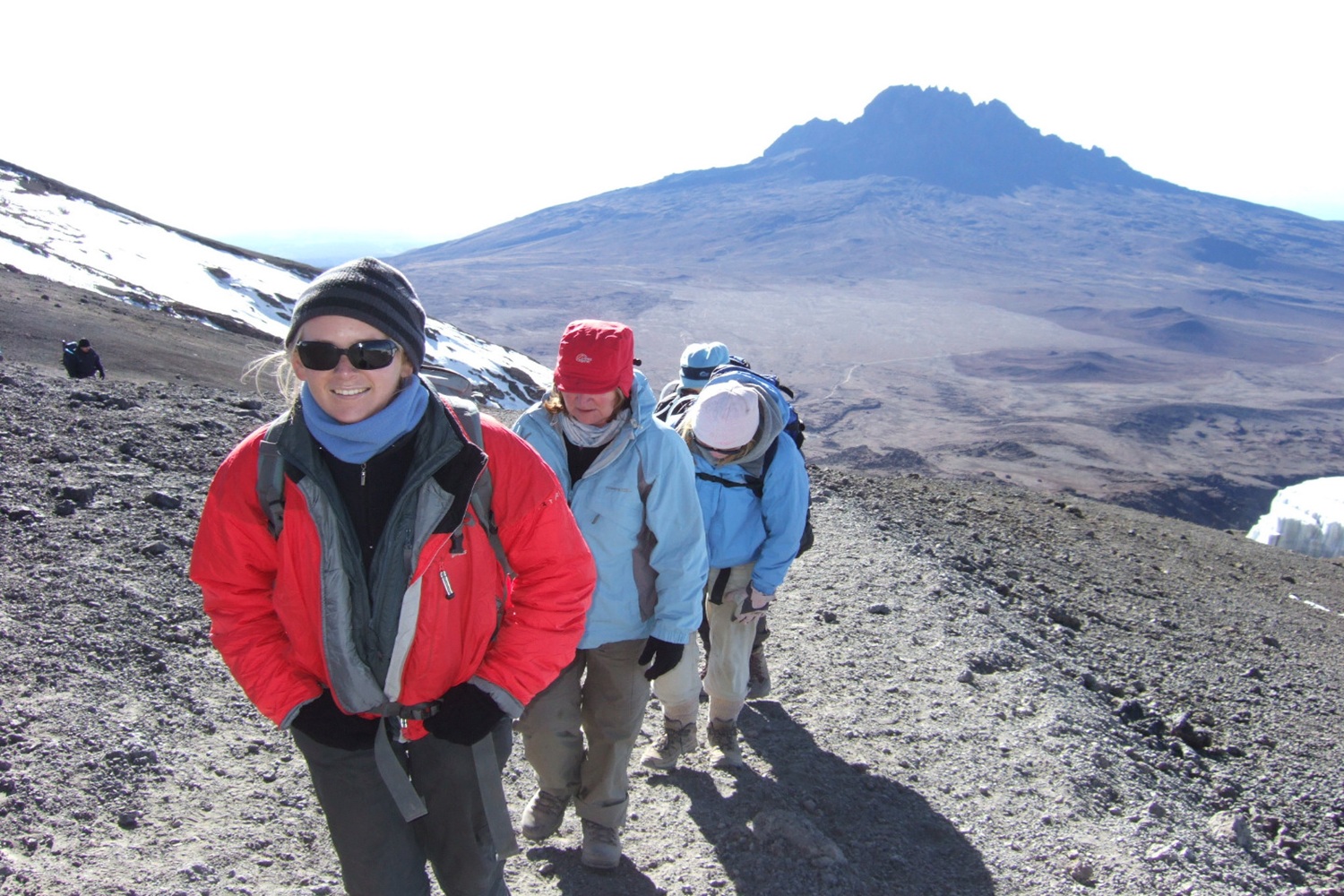
Choose this shorter Marangu climb if you have limited time. Sleep in mountain huts and trek through rainforest, moorland and alpine desert to Uhuru Peak.
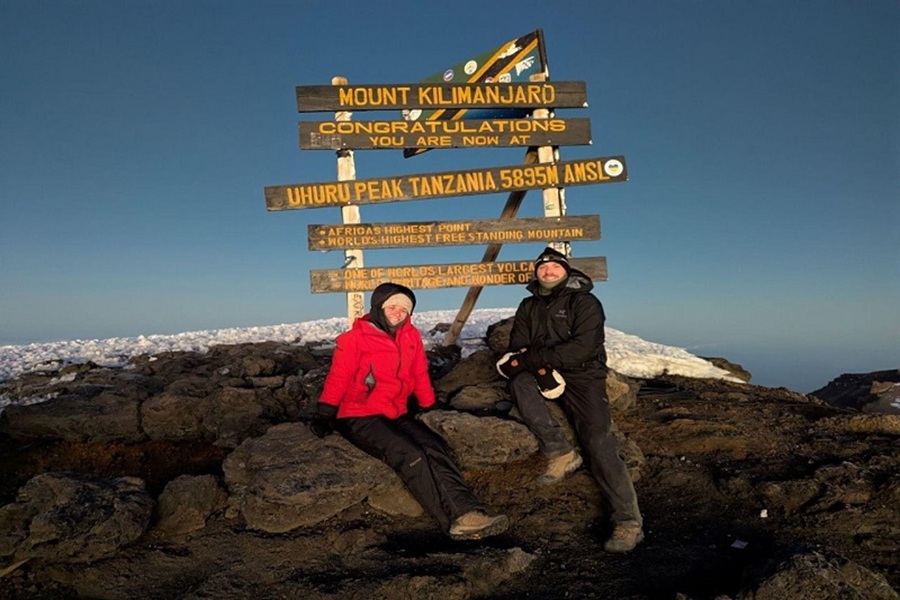
Give yourself more time to acclimatize with an extra day at Horombo Hut before the summit. This is the recommended Marangu itinerary for most climbers.
The huts are the biggest difference.
If you dislike sleeping in tents, waking up in a wet sleeping bag or camping in cold mountain conditions, Marangu gives you a very different experience from Machame or Lemosho.
However, if your main priority is maximum acclimatization and summit success, you should compare Marangu with longer routes such as 7-day Machame, 8-day Lemosho or the Northern Circuit.
The Marangu Route is moderate in terms of terrain but challenging because of altitude.
You do not need technical climbing experience. There are no technical rock-climbing sections, ropes or specialized mountaineering skills required for the normal route.
The trail is generally well established and has a more gradual profile than several other Kilimanjaro routes.
But reaching 5,895 m is still a major physical challenge.
The main difficulties are:
The important point is that Marangu is not difficult because of technical terrain. It is difficult because your body has to function at very high altitude.
The trail itself is among the easiest to walk, but the overall climb is not necessarily the easiest.
This is where many travelers get confused.
A route can have gentle terrain and still have a lower summit success rate if its itinerary is too fast.
The 5-day Marangu itinerary is particularly compressed. The 6-day version improves the situation by adding an acclimatization day at Horombo.
Yes, beginners can climb Marangu, but I strongly recommend the 6-day itinerary.
A first-time climber should not choose the 5-day version simply because it is cheaper or shorter.
For a beginner, the priorities should be:
If you are fit enough to walk for 5–7 hours per day and prepare properly, you can attempt Marangu without previous mountain-climbing experience.
Marangu begins at approximately 1,860 m (6,100 ft) and climbs to 5,895 m (19,341 ft) at Uhuru Peak.
That is a vertical difference of approximately 4,035 m / 13,238 ft.
The route passes through several ecological zones as you climb.
| Location | Approx. Elevation |
|---|---|
| Marangu Gate | 1,860 m |
| Mandara Hut | 2,720–2,740 m |
| Horombo Hut | 3,720 m |
| Kibo Hut | 4,703 m |
| Gilman's Point | 5,681 m |
| Uhuru Peak | 5,895 m |
Exact elevations can vary slightly between published route references.
The major weakness of Marangu is its relatively fast altitude progression, particularly on the 5-day itinerary.
You climb from:
1,860 m → 2,740 m → 3,720 m → 4,703 m
before attempting the summit at 5,895 m.
That is a substantial increase in only a few days.
The 6-day itinerary solves part of this problem by adding an extra day at Horombo Hut at approximately 3,720 m.
The complete Marangu trek is generally around 70–75 km (43–47 miles) round trip, although published distances vary depending on exactly how the route and side hikes are measured. Some current route references give figures around 72 km, while others publish somewhat different totals.
The important thing is that Marangu is not a short walk simply because it takes five or six days.
You still have to climb from approximately 1,860 m to 5,895 m and then descend all the way back to the gate.
A representative 6-day itinerary looks like this:
| Day | Route | Approx. Distance |
|---|---|---|
| 1 | Marangu Gate → Mandara Hut | ~8 km |
| 2 | Mandara → Horombo | ~12 km |
| 3 | Horombo acclimatization hike | ~5–8 km |
| 4 | Horombo → Kibo Hut | ~10 km |
| 5 | Kibo → Uhuru Peak → Horombo | ~16–18 km |
| 6 | Horombo → Mandara → Marangu Gate | ~18 km |
Exact distances vary according to the side hike used on the acclimatization day and the operator's route measurement.
The total distance is not dramatically shorter than every other route, but the 5-day schedule compresses the ascent into fewer days.
This is one reason Marangu can look easy in a brochure but become difficult at altitude.
The huts are the defining feature of Marangu.
TANAPA officially lists Mandara, Horombo and Kibo as operational hut facilities on the route.
Elevation: approximately 2,720–2,740 m
Mandara is the first overnight stop after leaving Marangu Gate.
The trail reaches Mandara through the montane forest, so this is normally the first night when you experience sleeping on the mountain.
The hut accommodation is basic and communal rather than hotel-style.
Elevation: approximately 3,720 m
Horombo is usually the busiest hut complex on Marangu because climbers spend a night here on the ascent and return through it after the summit.
On the 6-day itinerary, you spend an additional night here for acclimatization.
This is one of the most important advantages of choosing six days.
Elevation: approximately 4,703 m
Kibo is the final overnight stop before the summit.
This is where you normally rest for several hours before beginning the midnight or early-morning summit attempt.
At this elevation, temperatures can be extremely cold, and sleep can be difficult because of the altitude.
The huts are basic mountain accommodation, not luxury lodges.
Expect:
Some hut facilities and amenities may be upgraded over time, but travelers should still think of them as mountain huts rather than hotels.
TANAPA confirms that Marangu uses alpine huts while the other main routes use designated tented camps.
Generally, no.
Traditional Marangu accommodation is dormitory-style, meaning you should be prepared to share sleeping space with other climbers.
If privacy is important to you, ask your operator exactly what accommodation is available for your dates before booking.
If you are choosing between five and six days, choose six days unless you have a specific reason to do the shorter itinerary.
The difference is one additional day, but that day is important because it gives your body more time to adapt to altitude.
The 5-day route is:
The main problem is not walking speed. It is that you reach high altitude too quickly.
The 6-day itinerary adds an acclimatization day at Horombo.
A common acclimatization hike takes you higher during the day before returning to sleep at approximately 3,720 m.
That gives your body additional exposure to altitude without immediately forcing you to sleep much higher.
| Factor | 5-Day Marangu | 6-Day Marangu |
|---|---|---|
| Duration | 5 days | 6 days |
| Cost | Lower | Higher |
| Acclimatization | Limited | Better |
| Extra Horombo day | No | Yes |
| Beginner suitability | Lower | Higher |
| Recovery time | Less | More |
| Summit preparation | More rushed | Better |
| Recommendation | Experienced/limited schedule | Most climbers |
The exact difference depends on the operator, but the additional day commonly adds a few hundred dollars or less, depending on group size and package structure.
If, for example, a 5-day package costs $1,600 and the 6-day package costs $1,900, the additional $300 is a worthwhile investment for most climbers.
Do not choose the 5-day version simply to save money if reaching Uhuru Peak is your main goal.
For 2026, a realistic budget for an organized Marangu climb is approximately $1,600–$2,800+ per person, depending on the number of days, group size, operator, inclusions and service level.
Current published prices include examples around $1,596–$1,850 for 5-day climbs and approximately $1,800–$2,800+ for 6-day climbs, although private and premium departures can cost more.
| Itinerary | Typical 2026 Budget |
|---|---|
| 5-Day Marangu | $1,600–$2,300+ pp |
| 6-Day Marangu | $1,800–$2,800+ pp |
| Private 1-Person Climb | Usually $2,000–$3,000+ |
| Larger Group | Often lower per person |
These are useful planning ranges, not fixed market prices.
A properly organized Marangu package normally includes:
TANAPA states that conservation, hut and rescue fees can apply depending on visitor category, route and number of days.
| Expense | Planning Budget |
|---|---|
| Tourist visa | $50 for many nationalities |
| Travel insurance | $80–$200+ |
| Crew tips | $200–$350+ |
| Sleeping bag rental | $30–$60 |
| Trekking poles | $10–$30 |
| Extra hotel nights | $30–$150+ per night |
| International flights | $700–$1,500+ |
Your actual total will depend on where you fly from, your nationality, insurance, equipment and accommodation.
Usually, yes, among the main trekking routes.
The main reason is that Marangu can be completed in 5 days, and the route already has permanent huts, so operators do not need to organize tent camping in the same way as they do on Machame or Lemosho.
However, the cheapest possible climb is not automatically the best value.
If spending an additional $200–$400 on a longer itinerary substantially improves your acclimatization opportunity, that can be a better investment than choosing the shortest package.
The best time to climb Marangu is generally during the drier months, especially January–February and June–October.
TANAPA describes the main dry periods as roughly late June–September and December–early March, with wetter periods around October–November and March–May.
| Period | Typical Conditions | Recommendation |
|---|---|---|
| January–February | Generally dry and clear | Excellent |
| March | Increasing rainfall | Possible |
| April–May | Long rains | Least favorable |
| June | Becoming drier | Very good |
| July–August | Dry and popular | Excellent, busier |
| September | Dry and favorable | Excellent |
| October | Generally good, rainfall may increase | Good |
| November | Short rains | Possible |
| December | Variable, improving later | Good |
There is one advantage Marangu has during wet weather:
You sleep in huts.
On routes where you camp, rain means dealing with wet tents, muddy ground and potentially wetter camping conditions.
Marangu's huts provide a roof and make the rainy-season experience more comfortable.
However, the trail itself can still become wet and muddy, especially in the rainforest.
There is no single official Marangu success rate that applies to every climber, and published estimates vary significantly by operator, itinerary and methodology.
For that reason, I would not claim that exactly 65%, 70% or 80% of all Marangu climbers reach Uhuru Peak.
Current published estimates place the 5-day Marangu success rate anywhere from roughly 30% to 65%, while estimates for the 6-day itinerary commonly fall around 60%–85%.
The important pattern is much more consistent than the exact percentage:
6-day Marangu performs substantially better than 5-day Marangu because of the additional acclimatization day.
The main issue is time.
The 5-day route takes you from:
1,860 m → 2,740 m → 3,720 m → 4,703 m → 5,895 m
in a very compressed schedule.
The 6-day version adds another night around 3,720 m, giving your body more time to adapt.
No.
Even an 80% reported success rate means that some climbers still do not reach Uhuru Peak.
Altitude sickness can affect anyone, regardless of fitness.
Your chances are influenced by:
The safest approach is to choose enough days, walk slowly and report symptoms early.
The summit attempt begins from Kibo Hut at approximately 4,703 m.
Most climbers start around midnight or shortly afterward so they can reach the crater rim around sunrise.
The route follows steep switchbacks over loose volcanic terrain toward:
Gilman's Point – 5,681 m
After reaching Gilman's Point, you continue around the crater rim toward:
Uhuru Peak – 5,895 m
The climb from Kibo Hut to Uhuru Peak can take approximately 6–8 hours, depending on fitness, weather and pace.
After reaching the summit, you descend back toward Kibo and continue down to Horombo.
Because you do not simply summit and stop.
On the 5-day and 6-day itineraries, you normally:
Kibo Hut → Gilman's Point → Uhuru Peak → Kibo Hut → Horombo Hut
This creates a very long day at extreme altitude.
Depending on the climber and itinerary, the total summit-day activity can reach approximately 12–16 hours.
That is one of the biggest physical challenges of Marangu.
Gilman's Point and Uhuru Peak are not the same place.
Gilman's Point: 5,681 m — one of the points on the crater rim.
Uhuru Peak: 5,895 m — the true summit and the highest point in Africa.
Reaching Gilman's Point does not mean you have reached Uhuru Peak.
From Gilman's Point, you continue around the crater rim for approximately 1–2 hours, depending on pace and conditions, to reach the summit.
Marangu offers beautiful scenery, but its landscape is somewhat less varied than Lemosho or Machame.
You pass through:
The first day takes you through lush rainforest with tall trees, moss and dense vegetation. Wildlife sightings can include monkeys, although sightings are never guaranteed.
As you climb above the forest, vegetation becomes shorter and the landscape opens up. This is where you begin to get impressive views of Kibo and Mawenzi.
The landscape becomes increasingly dry and barren as you approach Kibo. You cross the broad Saddle between Kibo and Mawenzi, one of the most distinctive landscapes on the Marangu Route.
Above approximately 5,000 m, vegetation disappears almost completely. The final approach is dominated by rock, ice, snow when present and extreme cold.
The Saddle is the broad alpine-desert area between:
After leaving Horombo, you cross this exposed area on the way to Kibo Hut.
It is relatively barren, and the landscape can feel completely different from the rainforest you walked through only a few days earlier.
The distance and altitude can make this section mentally demanding even though the trail itself is not technically difficult.
Marangu is one of the more established and popular Kilimanjaro routes.
The huts concentrate climbers at the same overnight locations, especially around:
During busy periods, you should expect to share hut facilities with other climbers.
This is very different from a private camping route where your group has its own tents and dining setup.
If you want a more social mountain experience, the communal hut system can actually be an advantage.
If you want privacy and solitude, Lemosho or Northern Circuit may be a better fit.
The biggest accommodation decision on Kilimanjaro is simple:
Marangu = huts.
Most other main routes = tents.
TANAPA confirms this distinction in its current visitor guide.
Advantages:
Disadvantages:
The huts make Marangu particularly attractive to travelers who do not enjoy camping.
Your operator normally provides meals throughout the climb.
A typical day includes:
You should carry a refillable water bottle and hydration system capable of carrying approximately 2–3 litres during trekking.
The exact amount you need depends on weather, walking pace and your guide's recommendations.
At altitude, hydration is important, but forcing excessive amounts of water is not necessary.
Facilities become more basic as you climb.
At lower huts, facilities can be more developed, but above the forest you should not expect hotel-style bathrooms.
Do not plan your Kilimanjaro climb around having daily hot showers.
A practical approach is to carry:
Marangu passes through several climate zones, so temperatures can change dramatically during the climb.
Lower on the mountain, daytime temperatures can be relatively warm.
Near the summit, temperatures can fall well below freezing.
Before summit day, you should be prepared for temperatures that can reach approximately -10°C to -20°C, with wind making conditions feel even colder.
Weather varies considerably by season and elevation.
This is why you need proper:
You do not need to become an elite athlete before climbing Marangu.
Your training should prepare you for long walking days rather than technical climbing.
Start training approximately 8–12 weeks before the climb if possible.
Focus on:
A useful target is being comfortable walking 10–15 km in a day, especially on hilly terrain.
You should also practice walking on consecutive days because Kilimanjaro is not a one-day hike.
Although Marangu has huts, you still need proper mountain equipment.
Essential items include:
Do not assume that sleeping in a hut means you can pack like you are going on an ordinary low-altitude hike.
Marangu is a particularly good choice if:
For most people, I would still recommend the 6-day itinerary.
Marangu may not be your best choice if:
You Want the Highest Possible Summit Opportunity
Consider 8-day Lemosho or 7-day Machame instead.
You Want the Best Scenery
Lemosho generally offers a more varied and scenic experience.
You Want a Quiet Trek
The Marangu huts can become busy, particularly during peak climbing periods.
You Want Different Scenery on Descent
Marangu uses the same general route for ascent and descent.
You Want a Very Gradual Acclimatization Schedule
Consider a longer route such as Lemosho or Northern Circuit.
The choice between Marangu and Machame mainly comes down to comfort vs route experience and acclimatization.
| Feature | Marangu | Machame |
|---|---|---|
| Duration | 5–6 days | 6–7 days |
| Accommodation | Huts | Tents |
| Starting side | Southeast | South |
| Distance | ~70–75 km return | ~62 km on standard 7-day itinerary |
| Terrain | Gentler | More varied/steeper |
| Scenery | Good | Excellent |
| Acclimatization | Moderate | Better on 7-day |
| Descent | Same route | Mweka |
| Privacy | Lower | Higher on private climbs |
| Cost | Generally lower | Generally higher |
| Best for | Hut comfort/budget | Scenery/acclimatization |
If you tell me: “I hate camping and want a bed.” → Choose Marangu.
If you tell me: “I want the best possible combination of scenery and acclimatization.” → Choose Machame or Lemosho, particularly on a longer itinerary.
| Feature | Marangu | Lemosho |
|---|---|---|
| Duration | 5–6 days | 7–8 days |
| Accommodation | Huts | Tents |
| Distance | ~70–75 km return | ~70–76 km |
| Difficulty | Moderate terrain / high altitude | Challenging |
| Acclimatization | Moderate | Excellent |
| Scenery | Good | Excellent |
| Crowds | Moderate–high | Quieter early |
| Cost | Lower | Higher |
| Best for beginners | 6-day | 8-day |
| Main advantage | Hut comfort | Acclimatization + scenery |
If your budget and schedule allow 8 days, Lemosho is generally the stronger choice for someone whose primary goal is the climbing experience and summit opportunity.
If you strongly prefer huts, Marangu remains the obvious choice.
Marangu can be completed in 5 or 6 days. The 6-day itinerary is recommended for most climbers because it adds an acclimatization day at Horombo.
The route reaches Uhuru Peak at 5,895 m (19,341 ft).
Expect roughly 70–75 km (43–47 miles) round trip, depending on the exact route measurement and itinerary.
It has one of the gentlest and most established trails, but that does not mean it is the easiest route for acclimatization or summit success.
Yes, especially the 6-day itinerary. Beginners should avoid choosing the 5-day version simply because it is cheaper.
There is no single official figure. Published estimates vary, with roughly 30–65% reported for 5-day climbs and around 60–85% for 6-day climbs, depending on the source and methodology. The consistent finding is that the 6-day itinerary performs better because it gives more time to acclimatize.
The 6-day version adds an acclimatization day at Horombo Hut, approximately 3,720 m, before you continue to Kibo.
A realistic 2026 planning range is approximately $1,600–$2,800+ per person, depending on itinerary, group size and operator.
No. Marangu is the main Kilimanjaro route that uses permanent mountain huts.
The main huts are:
Traditional Marangu huts are primarily communal dormitory-style accommodation. Ask your operator about the exact hut arrangement available for your dates.
It can be, especially at the huts during peak climbing periods. July–September is particularly popular.
The huts are a major advantage during wet weather because you have a roof instead of sleeping in a tent.
The trail itself is not technically dangerous for a properly prepared trekker, but altitude is a serious risk. Symptoms of altitude illness should be reported immediately to your guide.
No. Technical climbing experience is not required.
You should have good walking endurance. You do not need to be an elite athlete, but you should prepare for several consecutive days of hiking and a very long summit day.
Yes. You see rainforest, heath and moorland, Mawenzi, the Saddle, Kibo and the summit zone. However, Lemosho and Machame generally provide more varied scenery.
The route starts at Marangu Gate on the southeastern side of Kilimanjaro, at approximately 1,860 m.
You return to Marangu Gate because the route uses the same general trail for ascent and descent.
No. TANAPA states that Kilimanjaro climbs must be undertaken with a licensed operator and guide; solo trekking is not permitted.
The Marangu Route is a good choice if you want the comfort of mountain huts, a relatively gentle trail and a shorter Kilimanjaro itinerary.
But do not choose it simply because someone told you it is the “easiest route.”
The most important decision is 5 days versus 6 days.
If you have the choice, take 6 days.
The extra day gives you an acclimatization day at approximately 3,720 m, reduces the pressure of the ascent and gives you a better opportunity to adapt before the summit attempt.
Choose Marangu if your priorities are:
Huts + comfort + lower cost + shorter itinerary.
Choose Lemosho or Machame if your priorities are:
Scenery + gradual acclimatization + a longer trekking experience + stronger summit odds.
For most first-time climbers who specifically want Marangu, the best combination is therefore:
6-Day Marangu Route + proper preparation + slow pace + careful altitude monitoring.
The huts may make Marangu more comfortable, but Uhuru Peak at 5,895 m is still the same high-altitude challenge.
Choose the recommended 6-day Marangu itinerary with mountain huts. We organize fixed departures and private climbs from Moshi.