
Climbing Mount Kilimanjaro is more than just a trek it’s a once-in-a-lifetime journey to the highest point in Africa and a personal challenge that rewards you with breathtaking views, resilience, and unforgettable memories. Rising to 5,895 meters above sea level, Kilimanjaro stands as a symbol of adventure and achievement, attracting thousands of climbers from around the world each year. From lush rainforest trails to the icy glaciers of the summit, every step of the journey offers a unique and awe-inspiring experience.
As global travel demand continues to rise, 2026 is already shaping up to be a busy year for Kilimanjaro expeditions. Peak season dates are limited, and many are filling up fast as more travelers plan ahead to secure the best conditions and routes. Whether you are a first-time trekker or an experienced hiker, climbing Kilimanjaro is an opportunity to push your limits and experience one of the world’s most iconic mountains.
If reaching Uhuru Peak is on your bucket list, now is the perfect time to plan, prepare, and secure your spot before availability becomes even more limited.
.jpg)
Mount Kilimanjaro attracts thousands of climbers every year from all over the world and for good reason. It is one of the few high-altitude mountains that can be climbed without technical mountaineering skills, making it accessible to determined beginners as well as experienced trekkers.
In 2026, climbers can expect:
Whether you’re traveling solo, as a couple, or in a group, Kilimanjaro offers a unique combination of adventure, culture, and natural beauty.
Timing your climb is one of the most important decisions you’ll make. The weather on Mount Kilimanjaro varies throughout the year, and choosing the right season can significantly impact your comfort, safety, and chances of reaching the summit. From dry, clear conditions to rainy and challenging periods, each season offers a different experience on the mountain.
This period offers cooler temperatures, fewer crowds, and a more शांत and peaceful trekking experience. Snow is more common at the summit, creating breathtaking scenery and excellent photography opportunities. It’s a great choice for climbers who want a quieter climb with good visibility, although temperatures can be colder, especially during summit night.
This is the most popular time to climb Kilimanjaro and for good reason. The weather is generally dry, skies are clear, and trail conditions are at their best. These months provide the highest chances of a successful and enjoyable summit. However, because this is peak season, routes can be busier, and the best dates and operators get fully booked months in advance.
These months bring heavy rainfall, especially on the southern routes of the mountain. Trails become muddy and slippery, and cloud cover can reduce visibility. Climbing during this time is more challenging and less comfortable, which is why most trekkers choose to avoid this season.
November experiences lighter rains compared to April and May, and the mountain is much less crowded. While conditions can be unpredictable, it can still be a good option for experienced hikers who don’t mind occasional rain and prefer a quieter, more private trekking experience.
In summary: For the best overall experience in 2026, aim for January–March or June–October, and book early to secure your preferred dates during these high-demand seasons.
Climbing Kilimanjaro is strictly regulated by park authorities to protect the environment and ensure climber safety. This means there are limits on group sizes and daily entries on each route.
As a result:
Booking early guarantees your preferred route, travel dates, and a well-prepared support team.
The cost of climbing Mount Kilimanjaro typically ranges from:
$1,250 to $2,700 per person
Pricing depends on several factors:
Choosing a reliable operator is crucial not just for your experience, but for your safety and chances of reaching the summit.
Choosing the right route is one of the most important decisions when planning your climb on Mount Kilimanjaro. Each route offers a different balance of scenery, difficulty, acclimatization, and overall experience. The route you choose will determine not only your chances of reaching the summit but also how much you enjoy the journey itself. Some routes are more scenic, others are quieter, and some are designed to give you the best possible acclimatization for higher success rates.
Below is a more detailed look at the main Kilimanjaro routes to help you make the best choice:
Difficulty: Moderate to Challenging
Best for: Adventurous trekkers seeking scenic variety
Success rate: Around 70–85% (higher with 7 days)
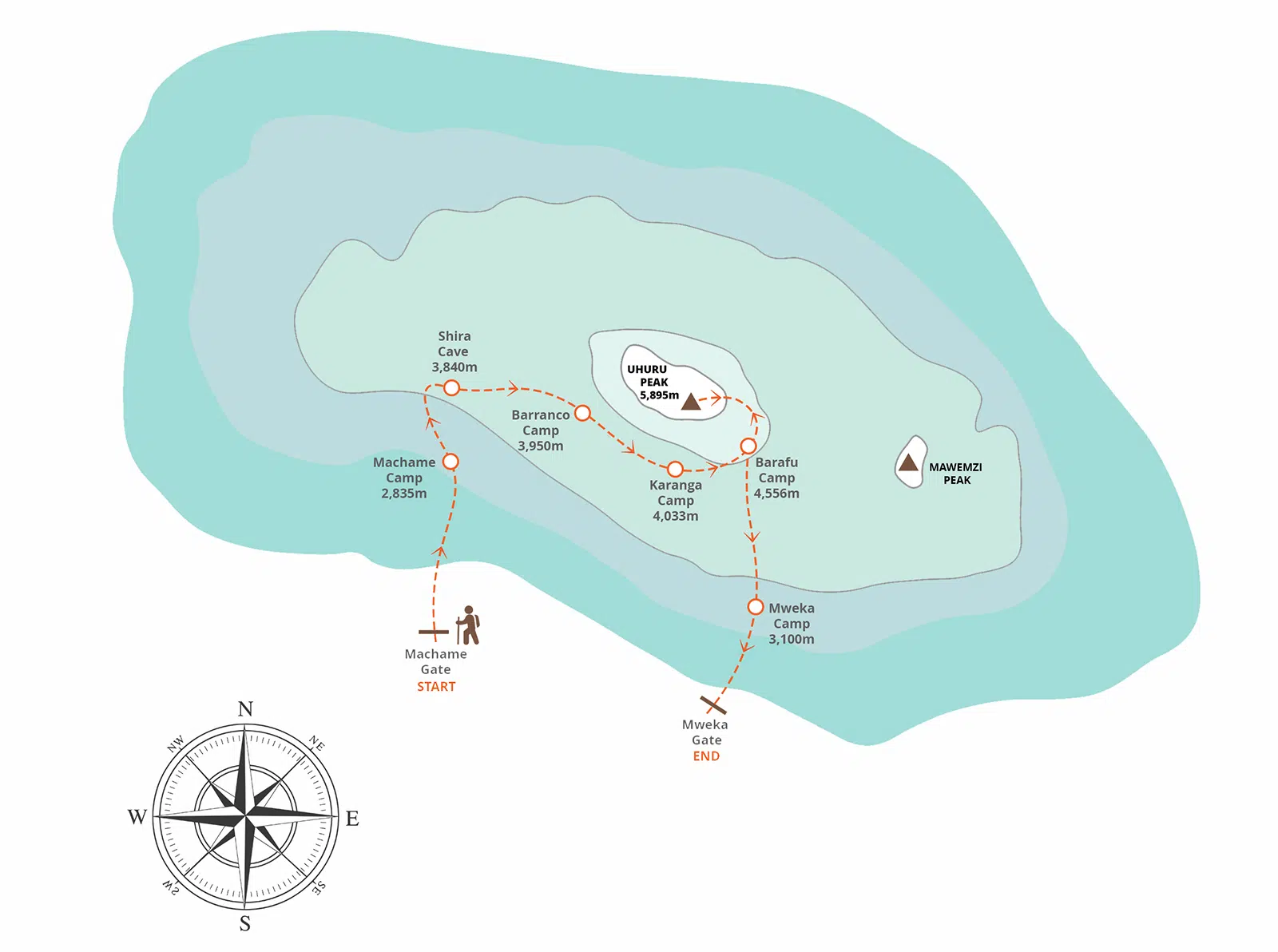
Often called the “Whiskey Route,” Machame is one of the most popular and scenic routes on Kilimanjaro. It begins in the lush rainforest on the southern side of the mountain and gradually climbs through moorland, heath, and alpine desert zones. One of its highlights is the Barranco Wall, a steep but non-technical climb that adds excitement to the journey. This route follows a “climb high, sleep low” profile, which helps with acclimatization when done over 7 days. Although it is considered moderately challenging due to steeper sections and longer trekking days, it offers excellent views and a rewarding experience. It is best suited for physically fit trekkers who want a scenic and adventurous climb.
Day |
Route Section |
Description |
|
Day 1 |
Machame Gate → Machame Camp |
Rainforest trekking, gradual ascent |
|
Day 2 |
Machame Camp → Shira Camp |
Moorland zone, first mountain views |
|
Day 3 |
Shira Camp → Lava Tower → Barranco Camp |
Acclimatization day, altitude gain & descent |
|
Day 4 |
Barranco Camp → Karanga Camp |
Climb Barranco Wall, shorter hike |
|
Day 5 |
Karanga Camp → Barafu Camp |
Final base camp preparation |
|
Day 6 |
Barafu → Uhuru Peak → Mweka Camp |
Summit attempt and descent |
|
Day 7 |
Mweka Camp → Mweka Gate |
Final descent (optional) |
Difficulty: Moderate
Best for: First-time climbers and scenic expeditions
Success rate: Around 85–95%
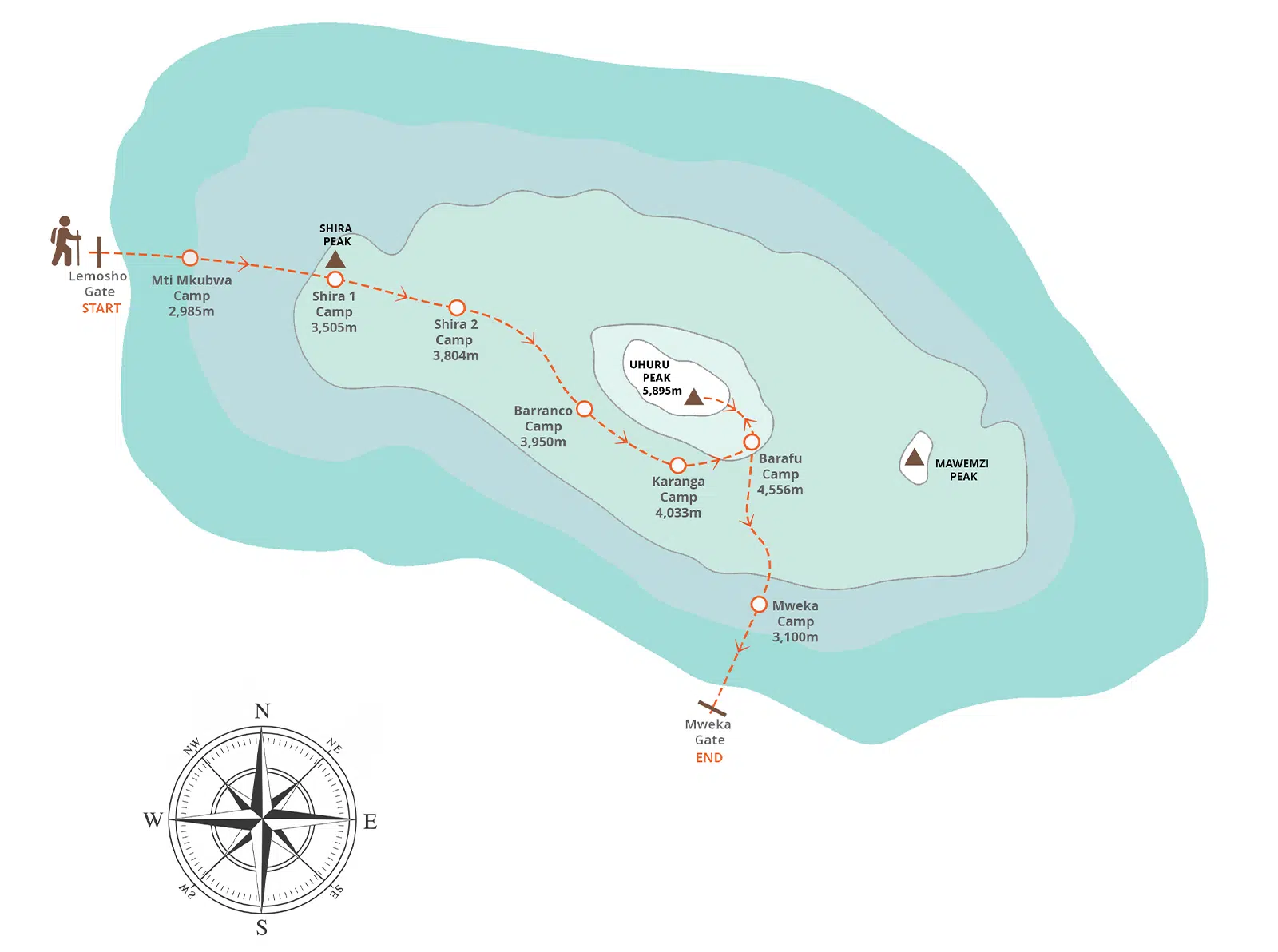
The Lemosho Route is widely regarded as one of the best overall routes on Kilimanjaro. It starts on the western side of the mountain, offering a quieter and more remote beginning compared to other routes. The trail passes through beautiful rainforest, where you may even spot wildlife such as colobus monkeys, before joining the Machame Route later on. With more days on the mountain, Lemosho provides excellent acclimatization and a high summit success rate. The gradual ascent and varied scenery make it a favorite for both first-time climbers and experienced trekkers. It is ideal for those who want a well-paced, scenic, and less crowded experience with a strong chance of reaching the summit.
Day |
Route Section |
Description |
|
Day 1 |
Lemosho Gate → Forest Camp |
Remote rainforest start |
|
Day 2 |
Forest Camp → Shira 1 Camp |
Moorland transition |
|
Day 3 |
Shira 1 → Shira 2 Camp |
Scenic plateau, acclimatization |
|
Day 4 |
Shira 2 → Lava Tower → Barranco Camp |
Altitude training day |
|
Day 5 |
Barranco Camp → Karanga Camp |
Climb Barranco Wall |
|
Day 6 |
Karanga Camp → Barafu Camp |
Final summit preparation |
|
Day 7 |
Barafu → Uhuru Peak → Mweka Camp |
Summit day |
|
Day 8 |
Mweka Camp → Mweka Gate |
Final descent |
Difficulty: Moderate (short duration increases difficulty impact)
Best for: Climbers preferring huts and comfort
Success rate: Around 60–70%
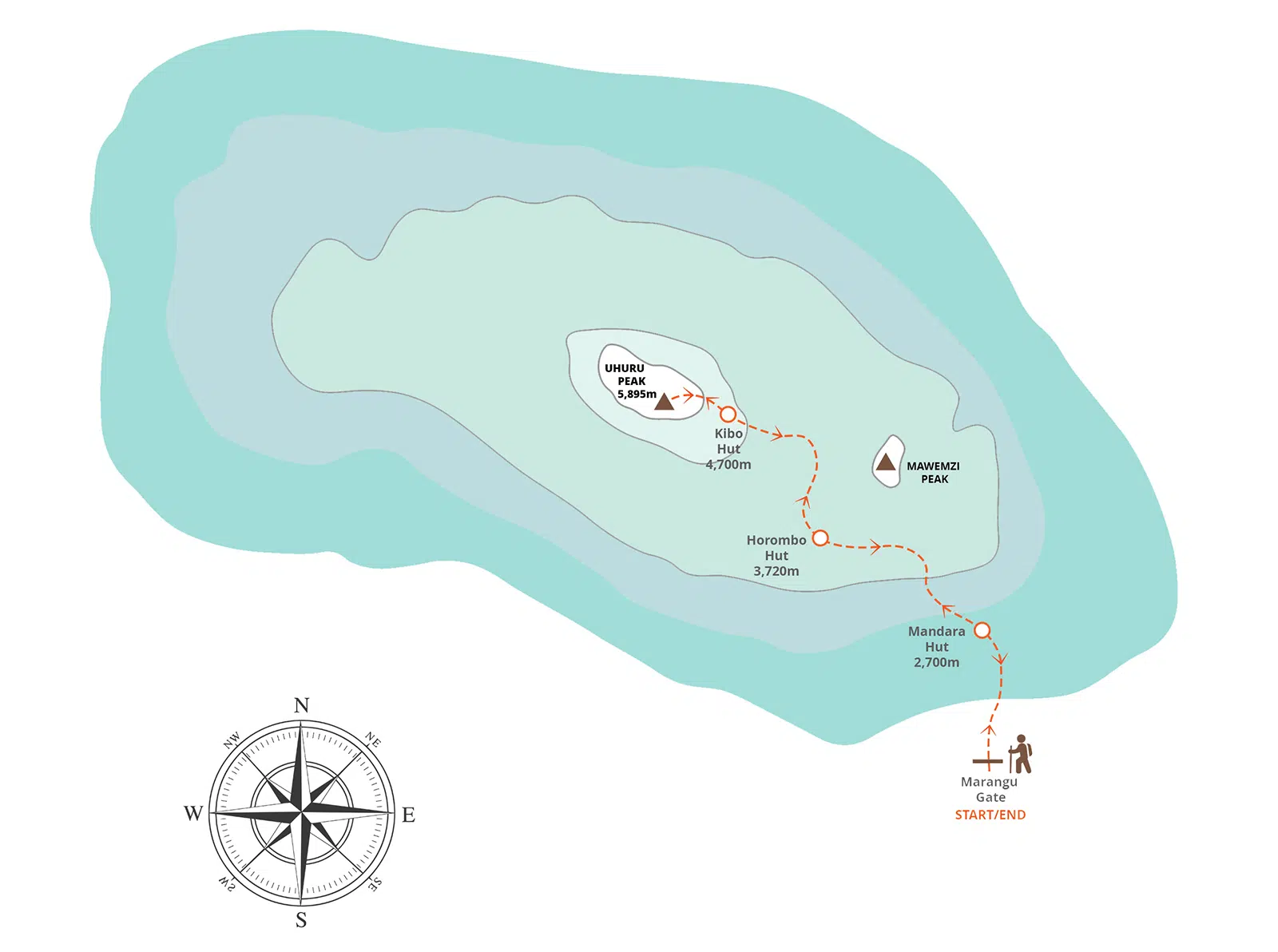
Known as the “Coca-Cola Route,” Marangu is the oldest and one of the most established routes on Kilimanjaro. It is unique because it offers hut accommodation instead of camping, with shared dormitory-style sleeping arrangements at each camp. The trail follows the same path up and down the mountain, passing through rainforest, moorland, and alpine desert zones. While it is often considered the easiest route in terms of terrain, the shorter duration means less time for acclimatization, which lowers the overall success rate. This route is best for climbers who prefer more comfort and have limited time, but it is recommended to take the 6-day option for better chances of success.
Day |
Route Section |
Description |
|
Day 1 |
Marangu Gate → Mandara Hut |
Rainforest zone |
|
Day 2 |
Mandara Hut → Horombo Hut |
Moorland trek |
|
Day 3 |
Horombo Hut (Acclimatization) |
Rest or short hike |
|
Day 4 |
Horombo Hut → Kibo Hut |
Alpine desert |
|
Day 5 |
Kibo Hut → Uhuru Peak → Horombo Hut |
Summit attempt and descent |
|
Day 6 |
Horombo Hut → Marangu Gate |
Final descent |
Difficulty: Easy to Moderate
Best for: Beginners and dry-season climbs
Success rate: Around 70–85%
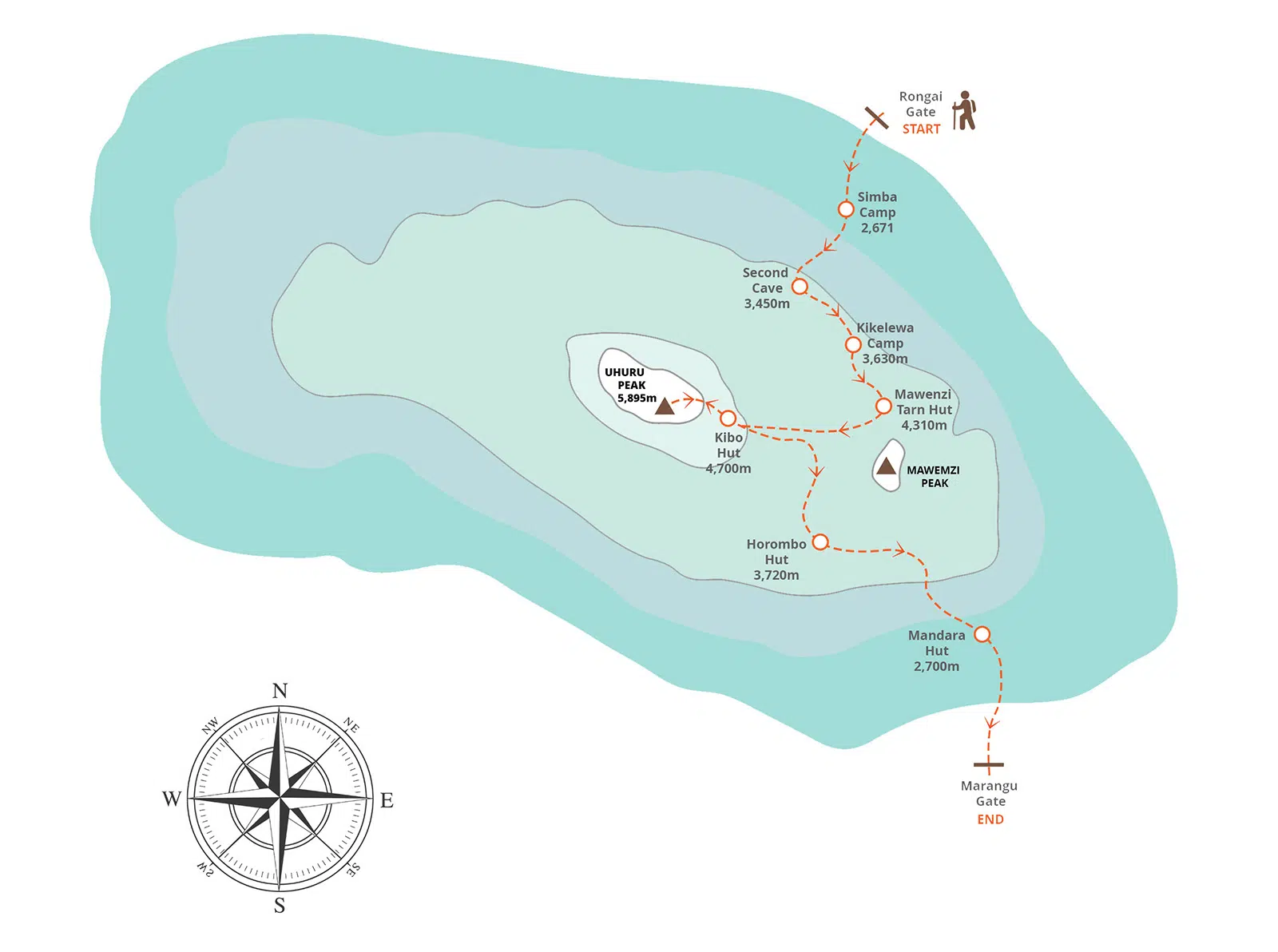
The Rongai Route approaches Kilimanjaro from the northern side, near the Kenyan border. It is one of the least crowded routes, offering a more peaceful and remote trekking experience. Because this side of the mountain receives less rainfall, it is generally drier and can be a good option during the rainy season. The ascent is gradual and steady, making it suitable for beginners or those who prefer a less physically demanding climb. However, the scenery is less varied compared to southern routes. The descent is usually done via the Marangu Route, giving climbers a chance to experience two different sides of the mountain.
Day |
Route Section |
Description |
|
Day 1 |
Rongai Gate → Simba Camp |
Northern rainforest |
|
Day 2 |
Simba Camp → Second Cave |
Gradual climb |
|
Day 3 |
Second Cave → Kikelewa Camp |
Moorland zone |
|
Day 4 |
Kikelewa Camp → Mawenzi Tarn Camp |
Scenic valley views |
|
Day 5 |
Mawenzi Tarn → Kibo Hut |
Join main summit route |
|
Day 6 |
Kibo Hut → Uhuru Peak → Horombo Camp |
Summit and descent |
|
Day 7 |
Horombo Camp → Marangu Gate |
Final exit |
Difficulty: Moderate
Best for: Maximum success rate and premium experience
Success rate: Around 90–95% (highest on Kilimanjaro)
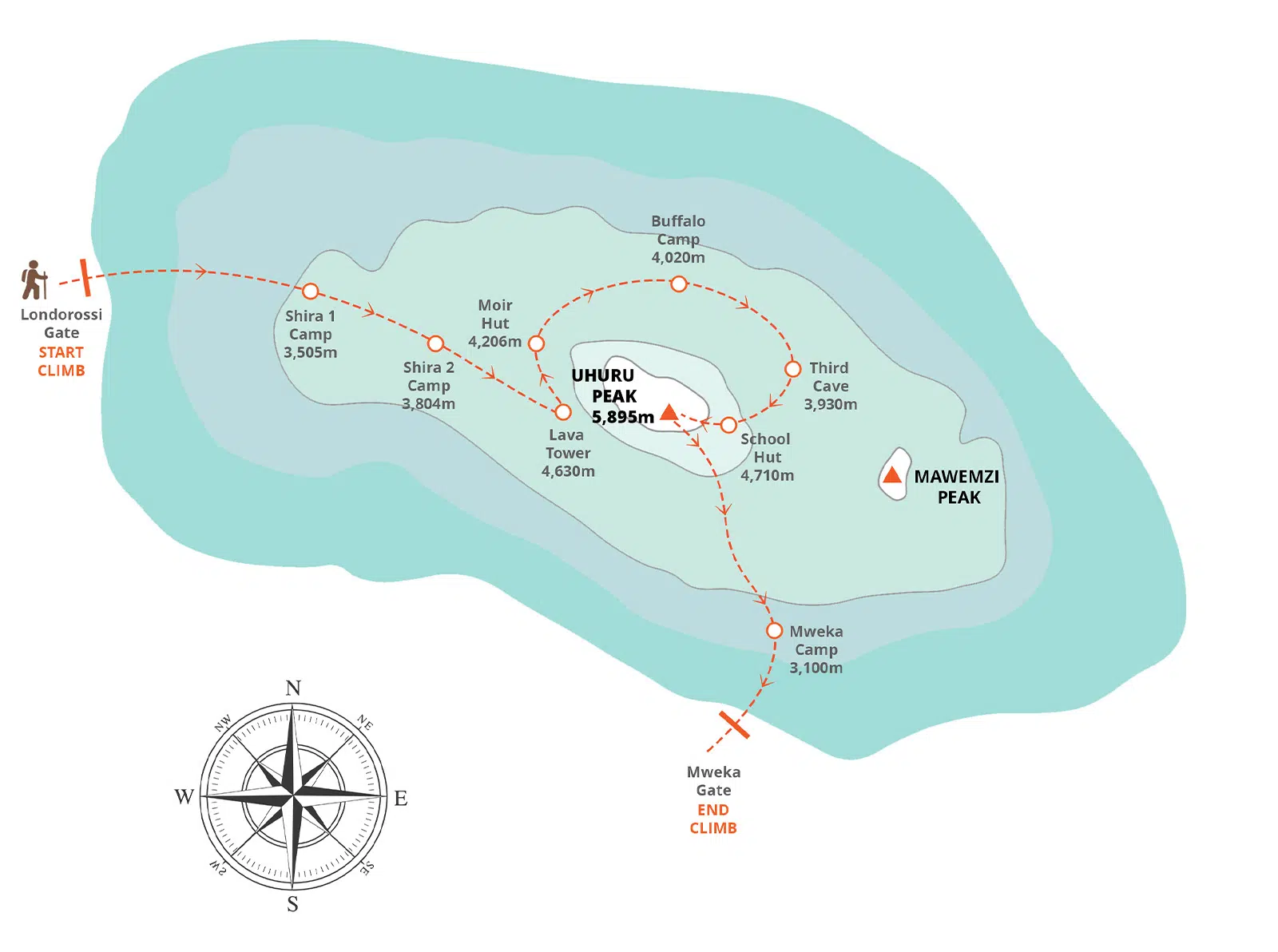
The Northern Circuit is the newest and longest route on Kilimanjaro, offering a complete journey around the mountain. It starts on the western side like Lemosho and then circles the northern slopes, providing incredible panoramic views and a true wilderness experience. Because of its longer duration and gentle ascent profile, it allows for the best acclimatization and has the highest summit success rate of all routes. It is also the least crowded, making it perfect for those who want a more private and immersive adventure. This route is ideal for climbers who have more time and want to maximize both their experience and their chances of reaching Uhuru Peak.
Day |
Route Section |
Description |
|
Day 1 |
Lemosho Gate → Mti Mkubwa Camp |
Rainforest start |
|
Day 2 |
Mti Mkubwa → Shira 1 Camp |
Moorland zone |
|
Day 3 |
Shira 1 → Shira 2 Camp |
Acclimatization |
|
Day 4 |
Shira 2 → Moir Hut |
Remote northern section |
|
Day 5 |
Moir Hut → Buffalo Camp |
Northern slopes |
|
Day 6 |
Buffalo Camp → Third Cave |
Gradual ascent |
|
Day 7 |
Third Cave → School Hut |
Final preparation |
|
Day 8 |
School Hut → Uhuru Peak → Mweka Camp |
Summit day |
|
Day 9 |
Mweka Camp → Mweka Gate |
Final descent |
Difficulty: Very Hard
Best for: Experienced high-altitude trekkers only
Success rate: Around 50–65%
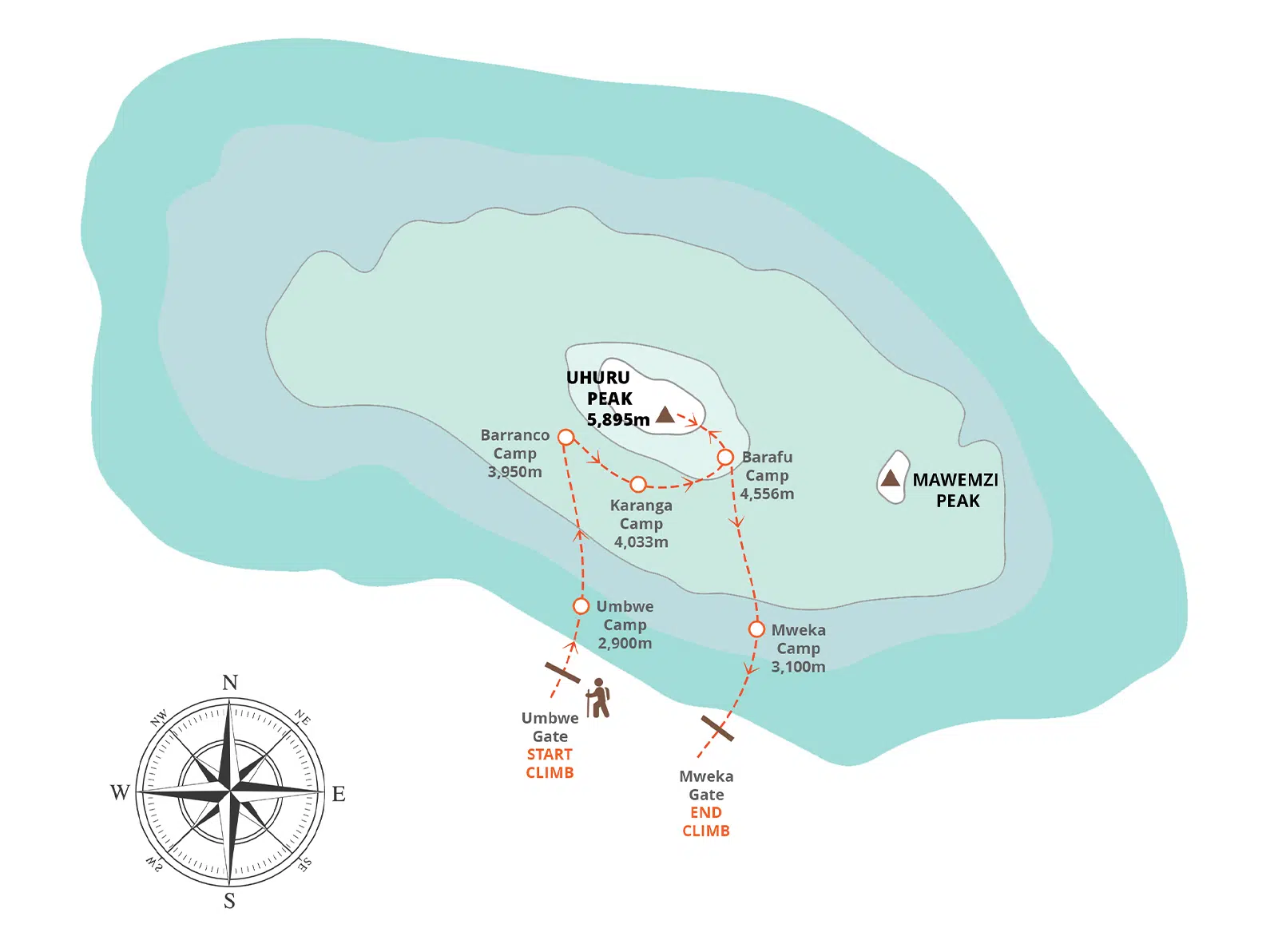
The Umbwe Route is the steepest, shortest, and most direct route on Kilimanjaro. It is known for its rapid ascent through dense rainforest and sharp ridges, making it physically and mentally demanding from the very beginning. Because it climbs too quickly, acclimatization is limited, which significantly reduces the summit success rate. This route is not recommended for beginners or average hikers. It is best suited for very fit, experienced trekkers who want a tough and fast-paced challenge. Compared to Machame or Lemosho, Umbwe is far more demanding and offers less margin for altitude adjustment.
Day |
Route Section |
Description |
|
Day 1 |
Umbwe Gate → Umbwe Cave Camp |
Very steep rainforest climb |
|
Day 2 |
Umbwe Cave → Barranco Camp |
Rapid altitude gain |
|
Day 3 |
Barranco Camp → Karanga Camp |
Climb Barranco Wall |
|
Day 4 |
Karanga Camp → Barafu Camp |
Final base camp |
|
Day 5 |
Barafu → Uhuru Peak → Mweka Camp |
Summit attempt |
|
Day 6 |
Mweka Camp → Mweka Gate |
Final descent |
Final Recommendation
Every route on Mount Kilimanjaro offers a unique experience but your success depends on choosing the right one for your fitness, time, and preparation.
If your goal is to reach Uhuru Peak successfully, longer routes with better acclimatization are always the safest choice.
Climbing Mount Kilimanjaro is a non-technical trek, meaning you do not need ropes, crampons, or prior mountaineering experience to reach the summit. However, it is still a serious high-altitude expedition that requires preparation, endurance, and the right mindset. The challenge is not about technical climbing skills, but about how your body responds to reduced oxygen levels as you gain altitude.
As you ascend through different ecological zones from rainforest to alpine desert and finally to icy summit conditions the air becomes thinner, and your body must gradually adapt. This is why proper planning and pacing are extremely important for a successful climb.
Key Points:
Success rates vary depending on the route and number of days spent on the mountain. Longer routes allow better acclimatization and significantly improve your chances of reaching the top of Mount Kilimanjaro.
Routes such as Lemosho and the Northern Circuit offer the highest summit success rates often between 85% and 95% especially when completed over 7 to 9 days. These routes are designed to give climbers more time to adapt to altitude, making the journey safer and more enjoyable.
A standard Kilimanjaro package includes everything you need for a safe and successful climb:
This ensures you can focus fully on the experience without worrying about logistics.
Here’s a simplified overview of a typical climb:
Each day brings new landscapes from lush forests to rocky highlands and icy summit views.
Preparation is one of the most important parts of a successful climb on Mount Kilimanjaro. Because you will move through several climate zones from warm rainforest at the base to freezing conditions at the summit you need to pack smartly and be ready for rapidly changing weather. Having the right gear not only keeps you comfortable but also improves your safety, energy levels, and overall summit success.
Essential Gear Includes:
Additional Important Items:
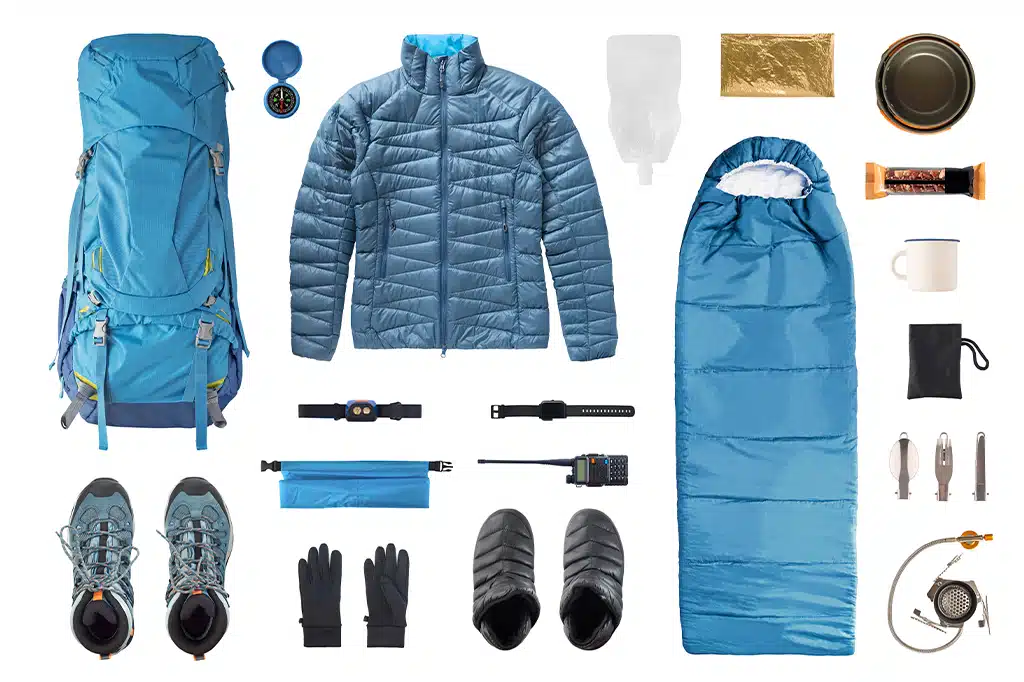
A complete and detailed packing list is usually provided after booking your Kilimanjaro climb. Proper preparation ensures you are fully ready for the challenge, allowing you to focus on enjoying the incredible journey to the summit of Mount Kilimanjaro.
We go beyond just guiding we create a safe, supportive, and memorable experience:
Thousands of climbers have trusted our team to guide them to the summit successfully.
.webp)
Standing on the summit of Mount Kilimanjaro at Uhuru Peak is a moment that stays with you forever. It is not only about reaching the highest point in Africa it is about the journey that takes you there, the challenges you overcome, and the personal transformation you experience along the way. Every step on the mountain builds strength, confidence, and a deeper appreciation of nature and your own abilities.
From the very first step on the trail through lush rainforest, to the rocky alpine zones, and finally the demanding final push to the summit under the stars, every moment becomes part of a powerful and unforgettable story. The changing landscapes, the support of your guides and team, and the quiet moments of reflection all come together to create a truly life-changing adventure.
Book Your Kilimanjaro Climb 2026 Today
Peak season spaces for 2026 are extremely limited and are already filling fast as more travelers plan their dream expedition to the Roof of Africa.
Don’t wait until it’s too late. Early booking ensures you secure your preferred dates, route, and the best possible support team for your climb.
Contact us today to:
Your journey to the Roof of Africa on Mount Kilimanjaro starts with one decision and that decision is today.