
Climbing Mount Kilimanjaro is one of the most iconic trekking experiences in the world, and Moshi town plays a central role in making that journey possible. Sitting at the foot of the mountain, Moshi is more than just a starting point it is the main hub where climbers prepare mentally, physically, and logistically before beginning their ascent. Almost every successful expedition begins here because it brings together experienced guides, reliable tour operators, equipment suppliers, hotels, and pre-climb briefing services all in one place, creating a smooth and well-organized start to the adventure.
The town’s close proximity to the mountain gates also makes it highly convenient, allowing climbers to quickly access all major Kilimanjaro routes without long transfers or delays. This reduces travel stress and gives trekkers more time to rest, acclimatize, and finalize preparations before starting the climb. Moshi also offers a welcoming atmosphere where climbers from all over the world meet, share experiences, and build excitement before the journey begins.
For 2026–2027, Kilimanjaro tours from Moshi are becoming more organized, safer, and more flexible than ever before. Improved guiding standards, better coordination among trekking teams, and enhanced safety awareness are making the climbing experience more reliable and enjoyable. As a result, climbers benefit from higher success rates, smoother logistics, and more personalized tour options giving them better chances of reaching the summit while enjoying a well-structured and unforgettable adventure.
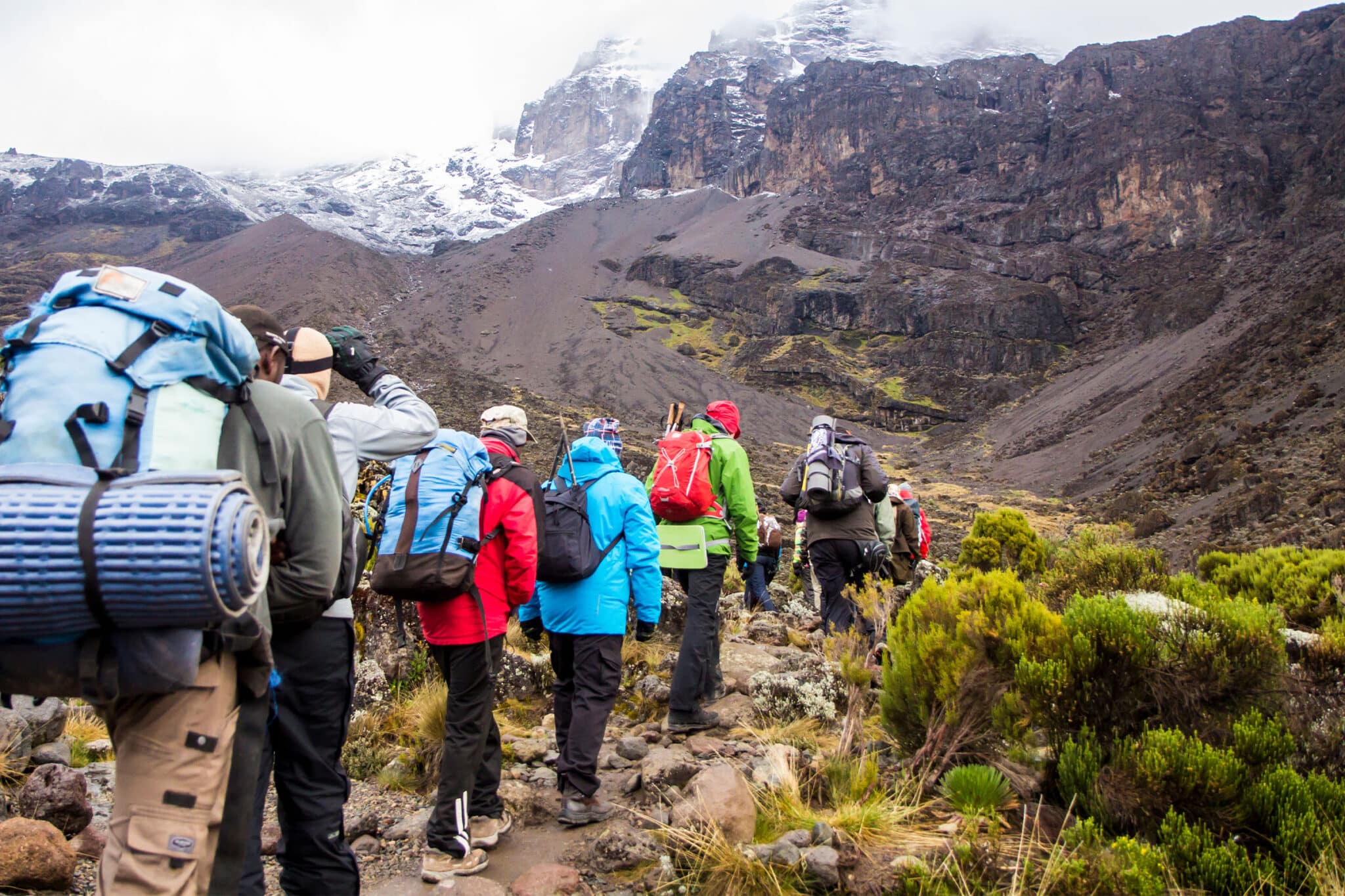
Moshi is the best starting point for Kilimanjaro expeditions because it provides everything a climber needs before the trek begins:
Starting your journey here ensures a smooth transition from arrival to mountain trekking.
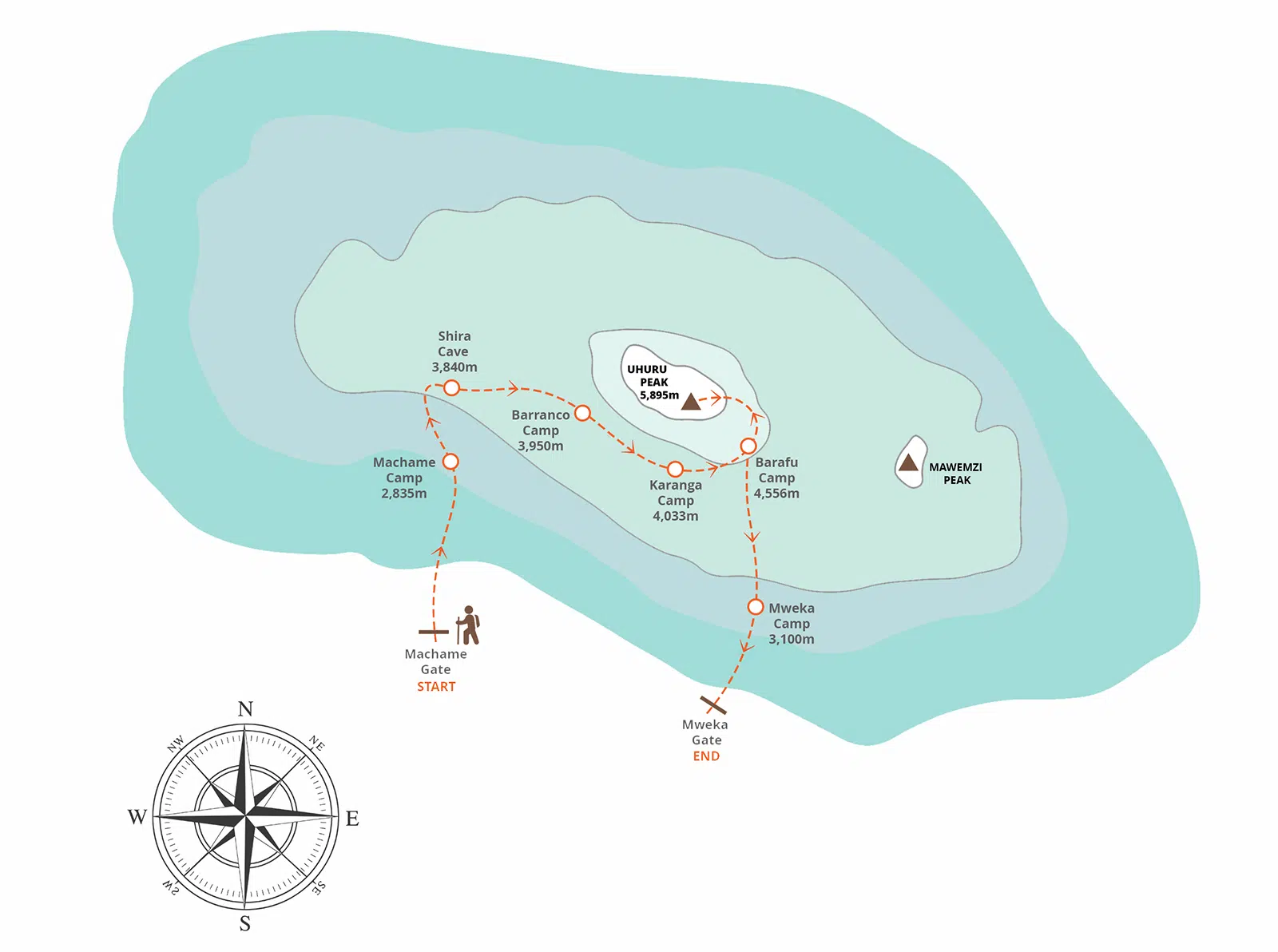
The Machame Route is the most booked and highly recommended option from Moshi for climbing Mount Kilimanjaro. Known as the “Whiskey Route,” it is popular because it offers a perfect combination of breathtaking scenery, varied landscapes, and a well-structured acclimatization profile that improves summit success rates. Many climbers choose this route because it feels adventurous yet manageable with proper preparation.
The journey begins in a dense tropical rainforest filled with rich vegetation and wildlife, then gradually climbs into moorland, alpine desert, and finally the icy summit zone. One of its biggest advantages is the gradual ascent pattern, which allows the body to adapt slowly to altitude changes. This “climb high, sleep low” strategy helps reduce altitude sickness and increases the chances of reaching Uhuru Peak.
Overall, the Machame Route provides a strong balance between challenge and reward. It is physically demanding in parts, especially the steep sections like the Barranco Wall, but the scenery and sense of achievement make every step worthwhile. For many climbers, it delivers one of the most complete and memorable Kilimanjaro experiences.
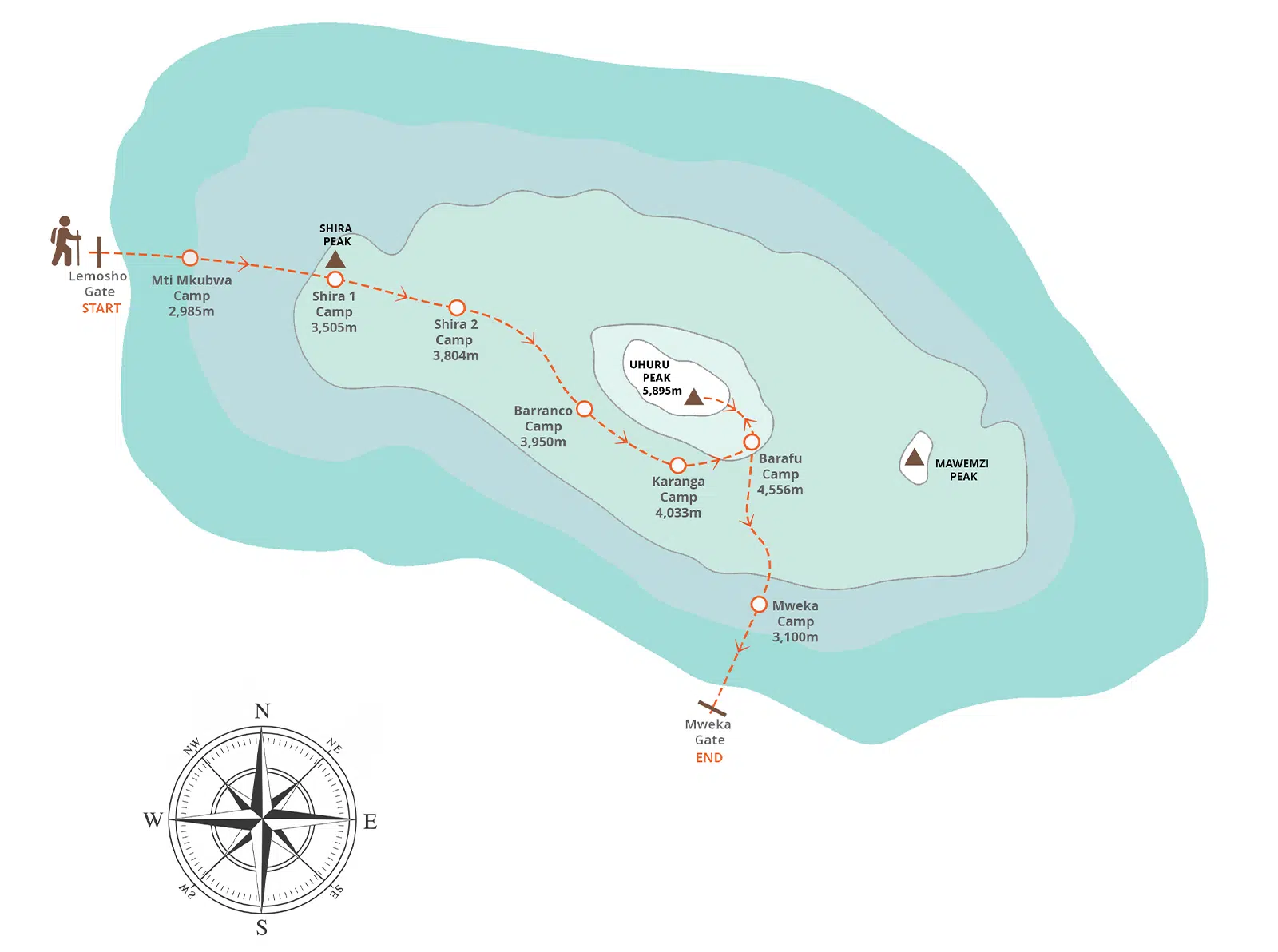
The Lemosho Route is one of the most highly recommended trekking options from Moshi for climbing Mount Kilimanjaro, especially for the 2026–2027 seasons. It is widely praised for its scenic beauty, peaceful environment, and excellent acclimatization profile, which makes it one of the safest and most successful routes to the summit. Unlike busier routes, Lemosho starts on the western side of the mountain, offering a more remote and untouched wilderness experience from the very beginning.
The trail is designed with a gradual ascent, allowing the body more time to adjust to increasing altitude. This slow and steady approach significantly reduces the risk of altitude sickness and improves overall summit success rates. As climbers progress, they pass through diverse ecological zones, including lush forest, moorland, and alpine desert, each offering breathtaking views and a strong sense of isolation from the outside world.
Overall, the Lemosho Route is ideal for beginners and those who want a safer, more comfortable climb without sacrificing adventure or scenery. It is often considered one of the most scenic and well-balanced routes on Kilimanjaro, combining beauty, tranquility, and one of the highest chances of reaching Uhuru Peak successfully.
• Day 1: Moshi → Londorossi Gate → Forest Camp
• Day 2: Forest Camp → Shira 1 Camp
• Day 3: Shira 1 → Shira 2 Camp (Acclimatization hike)
• Day 4: Shira 2 → Barranco Camp via Lava Tower
• Day 5: Barranco → Karanga Camp
• Day 6: Karanga → Barafu Base Camp
• Day 7: Summit attempt → Uhuru Peak → Mweka Camp
• Day 8: Mweka Camp → Mweka Gate → return Moshi
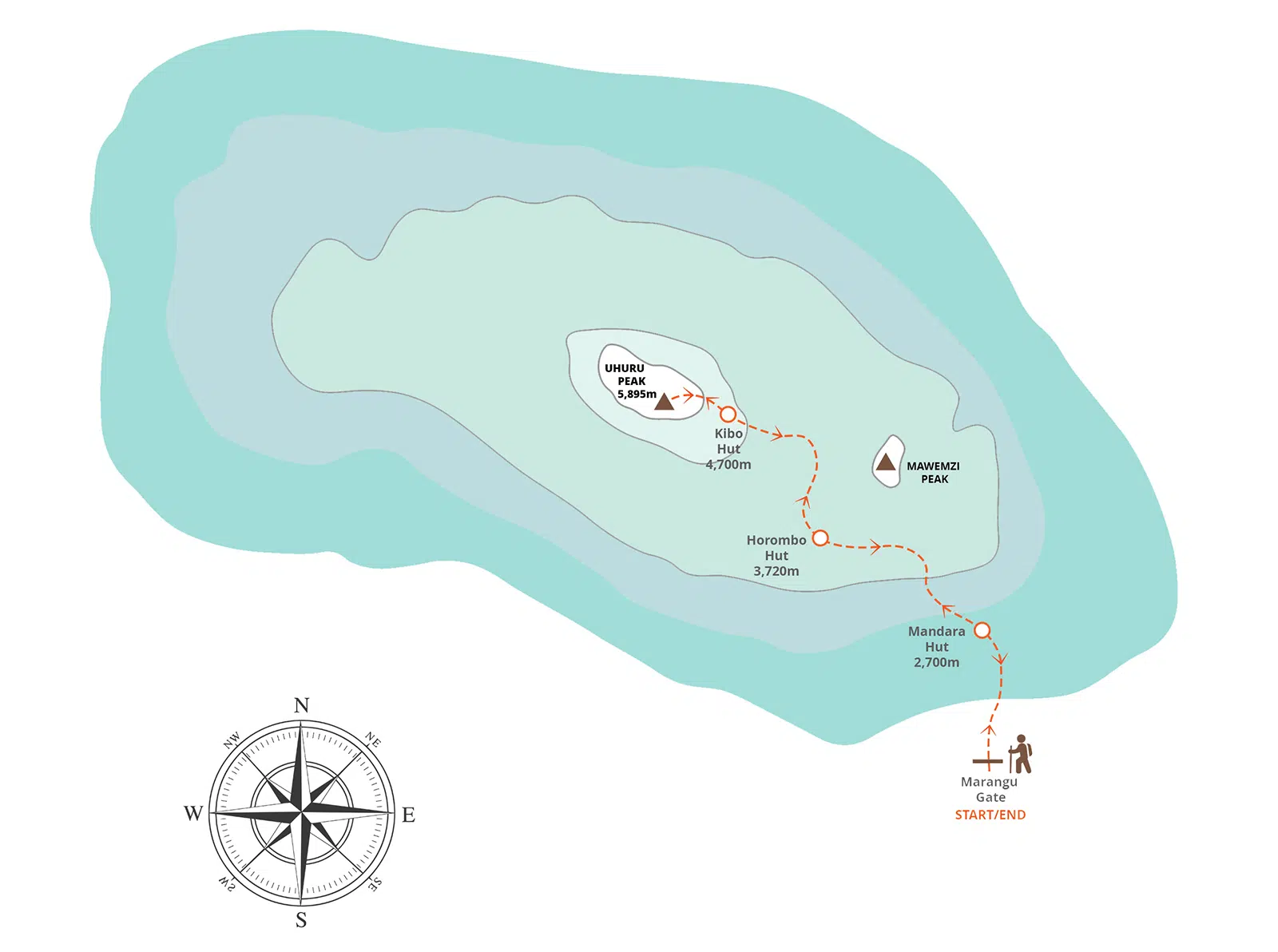
The Marangu Route is one of the oldest and most established ways of climbing Mount Kilimanjaro from Moshi. It is often called the “Coca-Cola Route” because it is considered more comfortable and straightforward compared to other trekking options. What makes this route unique is that it offers hut accommodation instead of camping, which appeals to climbers who prefer a bit more structure and comfort during their journey.
This route follows a direct path up and down the mountain, making it the shortest option to the summit. Because of its shorter duration, the trail is easier to organize logistically, with fixed sleeping huts, dining facilities, and a simpler overall trekking system. However, the rapid ascent means less time for the body to adjust to altitude changes, which can make the climb more physically demanding for some trekkers despite its “easier” reputation.
While Marangu is convenient and comfortable, climbers should be aware that the shorter acclimatization period can lower summit success rates compared to longer routes. Still, for those who value simplicity, hut accommodation, and a direct trekking experience, it remains a popular choice especially for first-time climbers who are well-prepared and fit.
• Day 1: Moshi → Marangu Gate → Mandara Hut
• Day 2: Mandara Hut → Horombo Hut
• Day 3: Acclimatization Day at Horombo Hut (optional hike)
• Day 4: Horombo Hut → Kibo Hut
• Day 5: Midnight summit → Uhuru Peak → return Horombo Hut
• Day 6: Horombo Hut → Marangu Gate → return Moshi
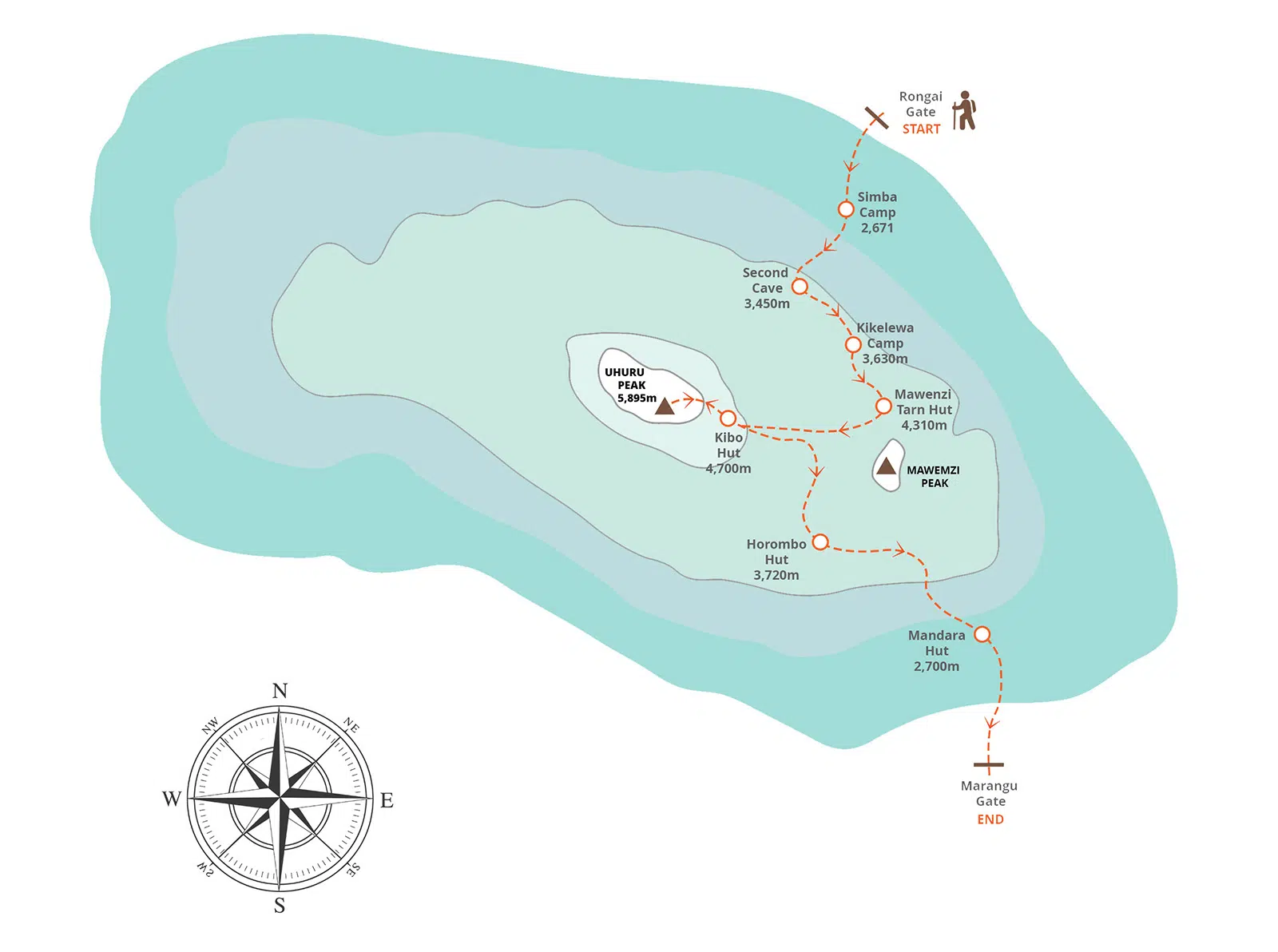
The Rongai Route is one of the most peaceful and least crowded ways of climbing Mount Kilimanjaro from Moshi. Unlike other routes that approach from the southern side, Rongai begins from the northern slopes near the Kenya border, giving climbers a completely different perspective of the mountain. This route is especially valued for its quiet atmosphere, making it ideal for those who prefer a more remote and less busy trekking experience.
The trail is known for being relatively dry compared to other routes, which means less mud and more stable walking conditions, especially during certain seasons. As climbers ascend gradually, they pass through beautiful forested areas where wildlife such as monkeys and various bird species can often be seen. The scenery becomes more open and rugged as the altitude increases, offering wide views and a strong sense of isolation in nature.
Rongai is considered a good option for climbers who want a calm and steady ascent without heavy crowds on the trail. Its gradual climbing profile also supports better acclimatization, giving trekkers a balanced combination of comfort, solitude, and a higher chance of enjoying the journey at a relaxed pace.
• Day 1: Moshi → Rongai Gate → Simba Camp
• Day 2: Simba Camp → Second Cave Camp
• Day 3: Second Cave → Kikelewa Camp
• Day 4: Kikelewa → Mawenzi Tarn Camp
• Day 5: Mawenzi Tarn → Kibo Hut (final base camp)
• Day 6: Night summit → Uhuru Peak → Horombo Hut
• Day 7: Horombo Hut → Marangu Gate → return Moshi
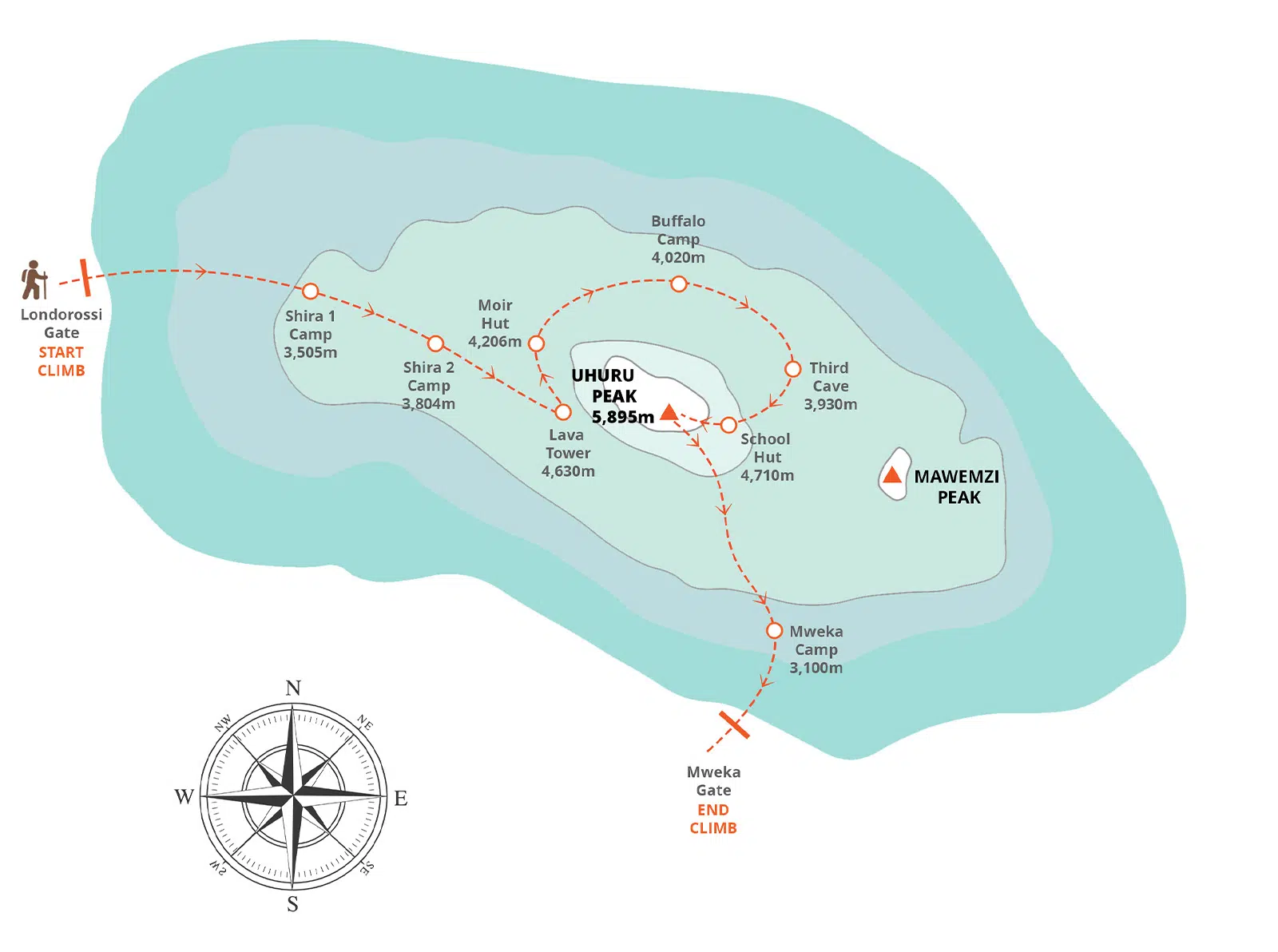
The Northern Circuit is the longest and most complete trekking route for climbing Mount Kilimanjaro from Moshi, offering an unmatched combination of scenery, safety, and summit success. It circles around the northern slopes of the mountain, giving climbers a rare 360-degree view of Kilimanjaro’s diverse landscapes. Because of its extended duration, this route is often considered the most scenic and least rushed way to reach the summit.
One of the biggest advantages of the Northern Circuit is its excellent acclimatization profile. The gradual ascent over 9–10 days allows the body more time to adjust to high altitude, significantly reducing the risk of altitude sickness. This slow and steady approach makes the climb more comfortable and increases the likelihood of a successful summit attempt compared to shorter routes.
The route is also known for its low traffic, meaning climbers enjoy a quieter and more immersive wilderness experience. Far from the busier trails, trekkers can fully appreciate the natural beauty, silence, and vast open landscapes of the mountain. For those who want the highest chance of reaching Uhuru Peak while enjoying a premium, less crowded adventure, the Northern Circuit is widely regarded as the best overall choice.
• Day 1: Moshi → Londorossi Gate → Forest Camp
• Day 2: Forest Camp → Shira 1 Camp
• Day 3: Shira 1 → Shira 2 Camp
• Day 4: Shira 2 → Moir Hut (acclimatization hike)
• Day 5: Moir Hut → Buffalo Camp
• Day 6: Buffalo Camp → Third Cave Camp
• Day 7: Third Cave → School Hut (base preparation)
• Day 8: Night summit → Uhuru Peak → Mweka Camp
• Day 9: Mweka Camp → Mweka Gate → return Moshi
• Day 10 (optional): Extra rest day or buffer day
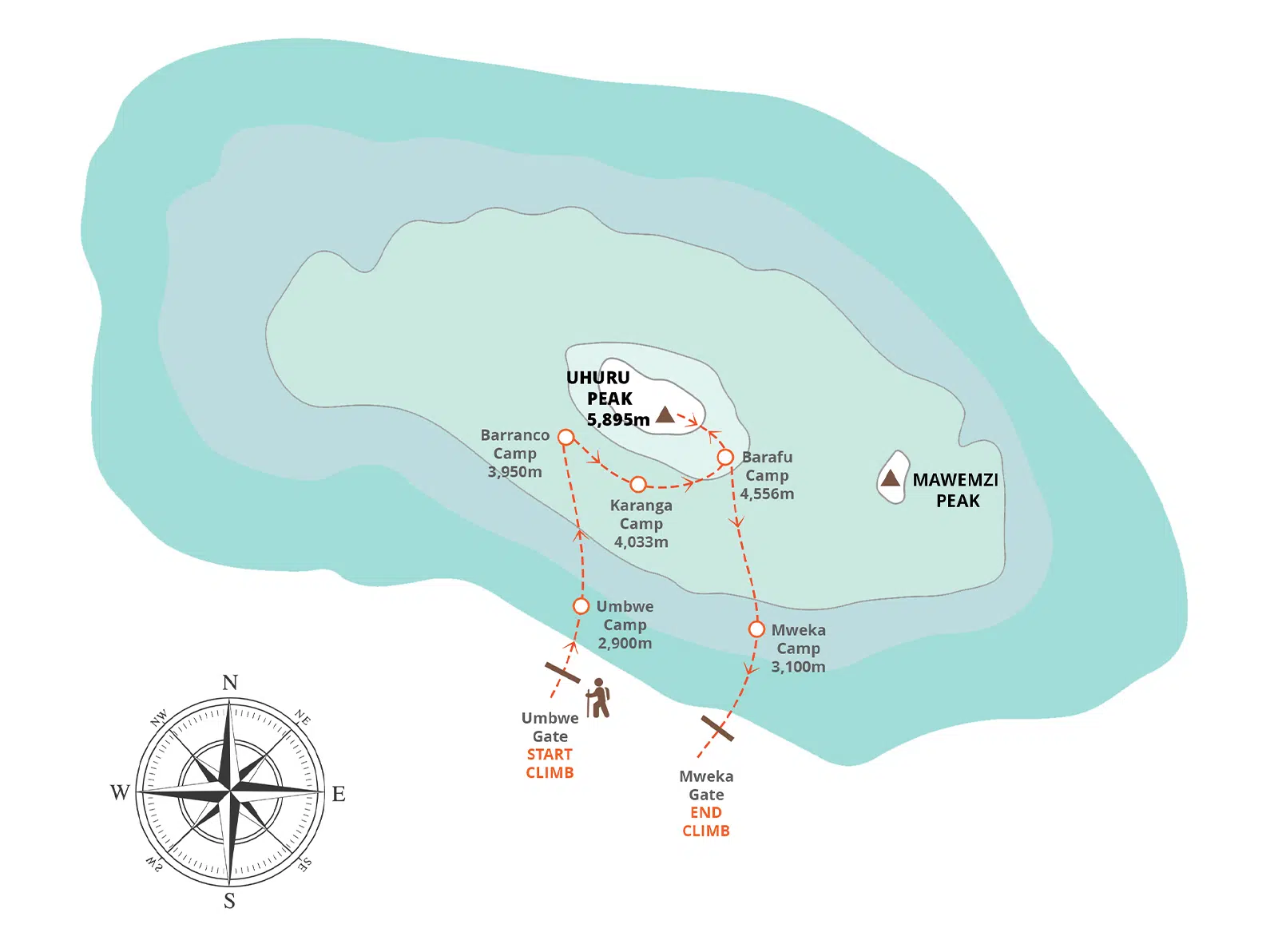
The Umbwe Route is the most direct and steepest path to climbing Mount Kilimanjaro from Moshi. It is known for its fast ascent and rugged terrain, making it one of the most physically demanding routes on the mountain. Unlike other routes that allow gradual acclimatization, Umbwe climbs sharply from the very beginning, which requires strong fitness, endurance, and prior hiking experience.
The journey starts in a dense rainforest where the trail is narrow, quiet, and often steep and slippery. As climbers gain altitude quickly, the landscape shifts into dramatic ridges and exposed sections with breathtaking views of valleys below. The sense of isolation is strong, as this route is much less crowded compared to popular options like Machame or Marangu.
Although Umbwe is shorter in duration, it is not recommended for beginners due to its rapid altitude gain and limited acclimatization time. However, for experienced trekkers seeking a tough, adventurous, and less-traveled path to the summit, it offers a thrilling and rewarding challenge with a true sense of wilderness and achievement.
• Day 1: Moshi → Umbwe Gate → Umbwe Cave Camp
• Day 2: Umbwe Cave → Barranco Camp (steep forest climb)
• Day 3: Barranco Camp → Karanga Camp (Barranco Wall)
• Day 4: Karanga → Barafu Base Camp
• Day 5: Midnight summit → Uhuru Peak → Mweka Camp
• Day 6: Mweka Camp → Mweka Gate → return Moshi
Climbing Mount Kilimanjaro from Moshi comes in different price levels depending on the route, number of days, group size, and quality of services included. Longer routes such as Lemosho or Northern Circuit usually cost more because they require more camping days, more staff support, and higher park fees.
These are the most affordable Kilimanjaro packages. They usually include shared group climbs, basic camping equipment, standard meals, and essential guiding services. Budget tours are popular among students and adventure travelers who want to experience Kilimanjaro at a lower cost. However, they may involve larger groups and simpler accommodation setups.
This is the most common price range for most climbers from Moshi. Mid-range packages offer better comfort, smaller group sizes, improved camping equipment, and more experienced guide teams. These tours often include better food quality, stronger logistical support, and higher attention to acclimatization, making them a balanced choice for safety and experience.
Luxury Kilimanjaro tours provide a high-end trekking experience with private guides, premium tents, upgraded meals, and extra porter support. Some packages even include portable toilets, heated dining tents, and personalized services. These climbs are ideal for travelers who want maximum comfort, privacy, and a fully customized itinerary.
Overall, the cost of climbing Kilimanjaro reflects not only the route and duration but also the level of safety, comfort, and support provided throughout the journey.
Climbing Mount Kilimanjaro is often described as a “non-technical” trek, but it still varies greatly in difficulty depending on the route you choose. The main differences come from altitude gain speed, number of trekking days, terrain type, and how well your body can adapt to changing oxygen levels.
These routes are considered relatively easier in terms of terrain and trekking pace. Marangu offers a more direct path with hut accommodation, while Rongai provides a quieter and more gradual ascent from the northern side. However, even though they are labeled “easier,” climbers should not underestimate them because the shorter acclimatization time can still make altitude a challenge. They are best suited for well-prepared beginners or those who prefer a simpler trekking style.
Lemosho and Machame are the most popular balanced routes. They combine scenic diversity with a better acclimatization schedule, which improves comfort and summit chances. The terrain includes rainforest, steep ridges, and alpine desert, making them more physically demanding than Marangu or Rongai. These routes are ideal for most climbers because they offer a good mix of challenge, safety, and high success rates when properly paced.
The Northern Circuit is the longest route on the mountain and is widely considered the safest option for reaching the summit. Its extended duration allows the body more time to adjust gradually to altitude, significantly reducing the risk of altitude sickness. Although it requires more days and endurance, the slower pace and excellent acclimatization make it one of the highest success-rate routes on Kilimanjaro.
Overall, longer routes generally increase summit success because they give your body more time to adapt, which is one of the most important factors when climbing high-altitude mountains.
Choosing the right season is one of the most important factors when planning a climb on Mount Kilimanjaro. Weather conditions directly affect trail safety, visibility, comfort, and your overall chance of reaching the summit successfully. While Kilimanjaro can be climbed year-round, some months offer far better conditions than others.
This period is known for its quieter trails and cooler temperatures. The mountain is less crowded, which gives climbers a more peaceful and personal experience. The skies are often clearer, especially in the mornings, offering beautiful views of the summit and surrounding landscapes. However, temperatures at higher altitudes can be colder, so proper cold-weather gear is essential.
This is considered the best and most popular climbing season. The weather is generally dry and stable, which makes trekking conditions safer and more predictable. Trails are less slippery, and visibility is excellent for most of the climb. Because of the high demand during this period, routes and camps can be busier, but it also creates a vibrant international trekking atmosphere.
These two periods offer the most stable weather conditions for trekking, which significantly improves comfort, safety, and summit success rates. Choosing between them depends on whether you prefer quieter trails or optimal dry-season conditions with more climbers on the mountain.
.webp)
Success on Mount Kilimanjaro depends heavily on how well your body adapts to altitude, the length of your chosen route, and the experience of your guiding team. Longer routes like the Northern Circuit and Lemosho give climbers more time to acclimatize, which significantly increases the chances of reaching Uhuru Peak. Shorter or steeper routes, such as Marangu and Umbwe, tend to have lower success rates because the body has less time to adjust to high altitude conditions.
The Umbwe Route is considered one of the most challenging paths on Kilimanjaro. Its steep and fast ascent means climbers gain altitude quickly, which increases the risk of altitude sickness if not properly prepared. However, for strong and experienced trekkers, it offers a rewarding and adventurous climb with fewer crowds.
Overall, while statistics give a general idea, actual success depends on preparation, pacing (“pole pole”), hydration, and listening carefully to your guide throughout the journey.
Climbing Kilimanjaro requires proper preparation:
Good preparation greatly increases summit success.
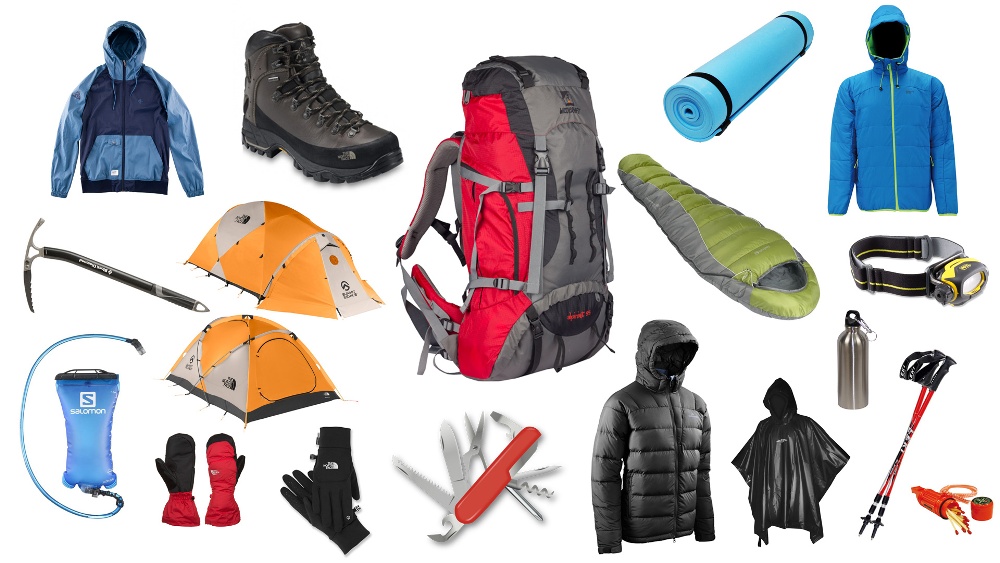
Packing the right gear is one of the most important parts of preparing for your Kilimanjaro adventure. Because the mountain has multiple climate zones from hot rainforest to freezing summit conditions you need equipment that can handle extreme and changing weather. Proper packing not only improves comfort but also increases your safety and summit success.
Proper packing can make a huge difference between a difficult climb and a comfortable, enjoyable journey.
Choosing the right route on Mount Kilimanjaro is one of the most important decisions for a successful climb. Each route offers a different balance of scenery, difficulty, acclimatization, and summit success rate. Here is a simple guide to help you decide based on your experience and goals:
This simple comparison helps you quickly match your fitness level, time, and expectations with the right Kilimanjaro route for your 2026–2027 adventure.
You don’t need to be an elite athlete, but you should have a moderate and steady level of fitness before attempting to climb Mount Kilimanjaro. The trek involves long walking days, usually between 5 to 8 hours, sometimes on steep and uneven terrain. Because of the high altitude, your body works harder than normal, so endurance is more important than speed or strength. If you can comfortably hike for several hours while carrying a light backpack and still recover well the next day, you are generally fit enough for the climb. Mental strength and patience also play a big role in your success.
No, you do not need previous hiking or mountaineering experience to climb Kilimanjaro. It is classified as a non-technical trekking mountain, meaning there are no ropes, ice climbing, or technical skills required. However, having some experience with long walks, hiking trails, or outdoor physical activity can make the journey more comfortable. First-time climbers successfully reach the summit every year by following a slow pace, listening to their guides, and preparing properly in advance.
It is recommended to train for at least 6 to 10 weeks before your climb, depending on your current fitness level. Your training should focus on building stamina and endurance rather than intense gym workouts. Activities such as hiking, brisk walking, jogging, cycling, and stair climbing are very effective. If possible, practice walking with a backpack to simulate real trekking conditions. Consistent preparation helps your body adapt to long trekking days, reduces fatigue, and significantly increases your chances of successfully reaching the summit of Kilimanjaro.
Moshi is not just a starting point for Kilimanjaro it is also a welcoming and relaxing town where travelers can unwind before or after their adventure on Mount Kilimanjaro. It offers a calm atmosphere, friendly locals, and beautiful views of the mountain on clear days, making it the perfect place to recover after a challenging trek or prepare mentally before the climb begins. The town blends nature, culture, and daily life in a way that gives visitors a deeper connection to the region. Before or after your climb, you can enjoy coffee tours at local plantations where you learn how Tanzania’s famous coffee is grown, harvested, and prepared. You can also visit stunning natural attractions such as Materuni Waterfalls, where lush green landscapes and fresh mountain water create a refreshing escape. In addition, exploring local markets and cultural experiences gives you a chance to interact with the Chagga community and understand their traditions, food, and way of life. Moshi’s peaceful environment makes it ideal for rest, recovery, and reflection after your climb.
Yes, many travelers choose to combine their climb of Mount Kilimanjaro with an unforgettable wildlife safari experience in Tanzania. After completing the trek, you can extend your adventure by visiting world-famous national parks such as the Serengeti, Ngorongoro Crater, or Tarangire. These destinations offer incredible opportunities to see the “Big Five,” vast savannah landscapes, and unique wildlife behaviors in their natural habitat. This combination creates a complete East African adventure that blends mountain trekking, wildlife exploration, and cultural discovery. It is one of the most rewarding travel experiences because you go from standing on the Roof of Africa to witnessing some of the richest wildlife ecosystems in the world all in one journey.
Moshi offers a wide variety of activities for both adventure seekers and relaxation-focused travelers. You can go on guided coffee farm tours, where you experience the full coffee-making process from bean to cup. You can also explore traditional Chagga villages, learning about local history, farming methods, and cultural traditions that have been passed down for generations. For nature lovers, hiking to nearby waterfalls such as Materuni or Marangu waterfalls is a refreshing experience surrounded by green forests and mountain scenery. Cycling tours around the foothills of Kilimanjaro are also popular for those who want light adventure with scenic views. On the other hand, travelers who prefer relaxation can enjoy cozy cafés, cultural centers, and scenic viewpoints around town, making Moshi a balanced destination for both adventure and rest.
.webp)
Climbing Mount Kilimanjaro from Moshi in 2026–2027 remains one of the most rewarding adventure experiences in the world. It is not just about reaching the summit, but about the full journey moving through changing climate zones, challenging yourself physically and mentally, and experiencing one of Africa’s most iconic landscapes steps by step. With improved trekking standards, better route organization, and more professional guiding teams, climbers today have a higher chance of success and a safer, more enjoyable experience than ever before.
With multiple route options available, every climber can choose an experience that fits their fitness level, time, and personal travel style. Whether you prefer the scenic and well-balanced Lemosho Route, the popular and adventurous Machame Route, or the quiet and remote Rongai Route, each path offers its own unique beauty and ultimately leads to the same unforgettable destination the summit of the Roof of Africa.
Start planning your Kilimanjaro adventure today. Secure your preferred 2026–2027 departure from Moshi and take the first step toward standing on top of Africa. It’s not just about difficulty it’s about determination and mindset
Book your climb with us now for expert-guided, safe, and unforgettable Kilimanjaro experiences.