

Most people know Mount Kilimanjaro for its snow-covered summit and unforgettable trekking adventures. However, many climbers are surprised to discover that Africa’s highest mountain is also home to a variety of wildlife. From playful monkeys swinging through rainforest trees to colorful birds flying across the moorlands, Mount Kilimanjaro offers far more than just mountain climbing. The lower slopes and forests surrounding the mountain form part of the protected Kilimanjaro National Park ecosystem, where many animals live naturally in the wild. As climbers pass through the rainforest zone, they may hear monkeys in the trees or spot unique birds along the trail. On quieter routes, some trekkers are even lucky enough to see larger animals in the distant forest areas. For nature lovers, climbing Kilimanjaro is not only about reaching the summit it is also a chance to experience one of Africa’s most beautiful mountain environments and discover the wildlife that lives along its slopes.
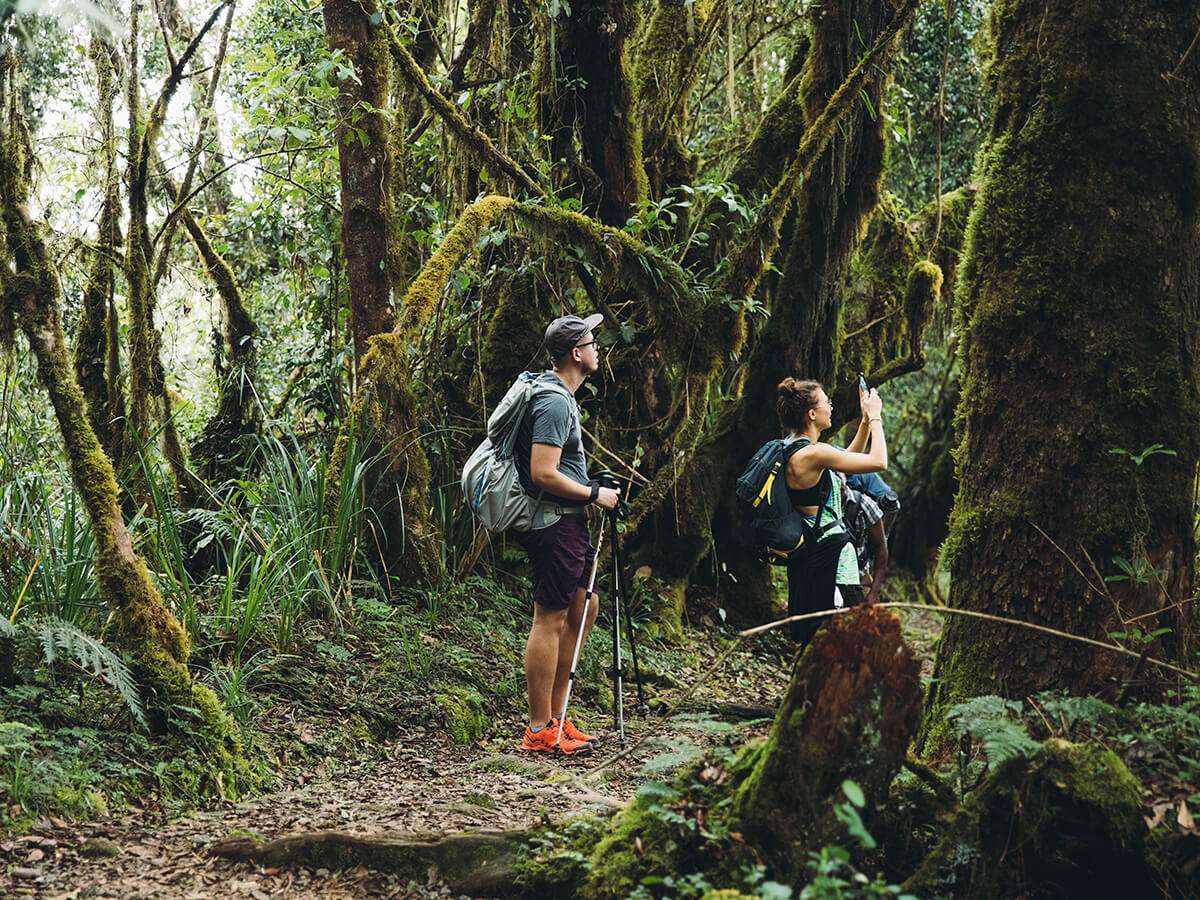
Mount Kilimanjaro rises from tropical farmland to icy glaciers at the summit. Because the mountain has different climate zones, it creates habitats suitable for many animals and birds.
The mountain is divided into five major ecological zones:
Most wildlife is found in the rainforest and lower moorland areas where there are enough water, food, and vegetation. The rainforest zone is especially rich in biodiversity and is one of the most beautiful parts of the climb.
One of the most commonly seen animals on Mount Kilimanjaro is the Blue Monkey. These monkeys live in the dense and humid rainforest zone at the lower slopes of the mountain, where food and shelter are abundant. Blue monkeys are highly active, intelligent, and social animals. They are often seen moving quickly through the forest canopy, jumping gracefully from branch to branch while communicating with soft calls. They usually live in groups, which helps protect them from predators and increases their chances of finding food. Trekkers on popular routes such as the Machame Route and Lemosho Route often spot them during the first days of climbing, especially when passing through the thick rainforest section. Their playful behavior and close proximity to hiking trails make them one of the most exciting wildlife encounters on Kilimanjaro.
.jpg)
Another iconic primate found on Kilimanjaro is the Black-and-white Colobus. These monkeys are instantly recognizable due to their striking black fur contrasted with long, flowing white tails. Unlike many other monkeys, colobus monkeys spend most of their lives high in the forest canopy, where they move gracefully and rarely descend to the ground. They are calm, quiet animals compared to other monkey species and are often seen resting or slowly feeding on leaves. Because of their unique appearance and elegant movement, they are considered one of the most beautiful wildlife species in Kilimanjaro’s rainforest ecosystem.
.jpg)
Although sightings are uncommon, the African Bush Elephant occasionally roam the lower forest areas surrounding Mount Kilimanjaro. These massive animals require large territories, so they are usually found in remote, undisturbed areas far from busy trekking routes. On rare occasions, elephants may pass through quieter sections of the northern side, particularly near the Rongai Route. Elephants are intelligent and sensitive animals that tend to avoid human activity. Because of their size and strength, encounters are very rare, and climbers are always advised to follow guides’ instructions if any wildlife movement is reported nearby.
The African Buffalo is one of the most powerful mammals living in Kilimanjaro’s forest zones. Buffaloes are strong herd animals known for their unpredictable behavior when threatened. They prefer dense forest areas where they can stay hidden and protected from disturbance. While they are not aggressive by nature, they can become dangerous if they feel cornered or surprised. Because of this, trekking inside Kilimanjaro National Park is always done with experienced guides and strict safety rules. Buffalo sightings are rare, but park rangers occasionally report their presence in deeper forest sections.
Smaller forest mammals such as the Bushbuck and other antelope species also inhabit the slopes of Mount Kilimanjaro. These shy and gentle animals are extremely difficult to observe because they rely on camouflage and quiet movement to avoid predators. They usually feed during early morning or late evening hours when human activity is low. Bushbucks prefer thick vegetation near water sources, making them more common in hidden forest patches. For hikers, spotting one is considered a special and memorable wildlife moment.
The elusive Leopard is one of the most mysterious animals associated with Kilimanjaro. Leopards are solitary, nocturnal predators that move silently through dense forest areas. Although they are believed to still inhabit parts of the mountain, actual sightings are extremely rare due to their secretive nature and preference for avoiding humans. Their presence on Kilimanjaro has long fascinated explorers and writers, especially after being mentioned in The Snows of Kilimanjaro. Today, they remain one of the most legendary and rarely seen animals on the mountain.
Mount Kilimanjaro is also a paradise for bird enthusiasts, especially in its rich rainforest ecosystem. The mountain hosts a wide variety of bird species that add color, sound, and life to the trekking experience.
Some of the most remarkable birds include:
.jpg)
Birdwatching is especially rewarding in the rainforest zone, where thick vegetation, flowering plants, and water sources create the perfect habitat for many species. Early morning hikes often provide the best opportunities to hear and see bird activity.
Dangerous animal encounters on Mount Kilimanjaro are extremely rare, and most climbers complete their journey without ever seeing any potentially dangerous wildlife. This is mainly because most animals naturally avoid humans, especially along the well-established trekking routes where guides, porters, and hikers are constantly moving.
The mountain’s wildlife has adapted to human presence over many years, and as a result, most species stay deep within the forest or move to quieter, less disturbed areas. However, it is important to remember that larger wild animals such as African Buffalo and occasionally African Bush Elephant do inhabit remote sections of the forest zone surrounding the mountain.
Because of this natural wildlife presence, all climbers are required to enter Kilimanjaro National Park with licensed and experienced guides. These professionals are trained in mountain safety, wildlife awareness, and emergency response. They understand animal behavior and know how to prevent risky encounters while keeping climbers safe throughout the trek.
In addition, park regulations are strictly enforced to ensure both visitor safety and wildlife protection. Staying with a guide, following instructions, and respecting park rules ensures that trekking on Kilimanjaro remains a safe and well-managed adventure, even in areas where wild animals may exist.
Different trekking routes on Mount Kilimanjaro pass through different landscapes and ecosystems, which means the chances of seeing wildlife vary depending on the route you choose. Some routes go deeper into quiet rainforest areas, while others are busier or pass through more open terrain. If your goal is to experience nature and wildlife during your climb, these are the best routes to consider:
The Lemosho Route is widely considered the most scenic and wildlife-rich route on Kilimanjaro. It starts on the western side of the mountain and passes through remote, untouched rainforest before joining other routes higher up. Because this route is less crowded, wildlife feels more active and undisturbed. Climbers often experience a true wilderness atmosphere, especially in the early days of the trek. Along this route, you are most likely to see:
The Lemosho Route is perfect for trekkers who want both adventure and a strong connection with nature.
The Machame Route is one of the most popular climbing routes on Kilimanjaro and begins in a dense rainforest zone rich with life. In the first section of the climb, hikers walk through thick vegetation where monkeys and birds are commonly seen. Because it is a well-traveled route, wildlife is still present but slightly more accustomed to human movement. On this route, you may encounter:
The Machame Route offers a good balance between scenic views, wildlife, and a busy trekking atmosphere.
The Rongai Route approaches Kilimanjaro from the northern side, which is much quieter and more remote compared to other routes. Because fewer climbers use this route, wildlife tends to move more freely and naturally. The environment feels more untouched, especially in the forest sections near the lower slopes. While sightings are not guaranteed, this route gives you a better chance of seeing:
The Rongai Route is ideal for trekkers who prefer a quieter, more remote experience with a slightly higher chance of seeing larger wildlife.
Near the summit of Mount Kilimanjaro, wildlife becomes extremely scarce. This is because the higher you climb, the more extreme the environment becomes, with freezing temperatures, strong winds, and very low oxygen levels making survival difficult for most animals. The upper parts of the mountain, especially the alpine desert and arctic summit zones, are mostly bare and rocky. Vegetation is very limited here, which means there is also very little food or shelter for wildlife to survive.
At this altitude, you should expect:
However, despite these harsh conditions, climbers may occasionally spot a few bird species adapted to high altitudes. One of the most common is the White-necked Raven, which is known for flying at very high elevations and sometimes follows climbing groups looking for food scraps. Large mammals such as buffaloes, elephants, or monkeys do not live anywhere near the summit area, including Uhuru Peak. The environment simply cannot support them at that altitude.
.jpg)
In short, the summit of Mount Kilimanjaro is not a place for wildlife viewing, but rather a dramatic, icy, and almost otherworldly landscape where nature shows its most extreme form.
No, lions do not live on Mount Kilimanjaro. The mountain is too cold, steep, and high for lions to survive comfortably. Lions are mainly found in open grasslands and savannah ecosystems where they can hunt large herbivores like zebras and wildebeests. On Kilimanjaro, the environment changes dramatically with altitude, and the higher forest and alpine zones are completely unsuitable for lions. While lions are present in other parts of Tanzania, such as national parks and safari areas, they are not part of the mountain ecosystem at all, so climbers do not need to worry about encountering them during the trek.
Yes, but sightings are very rare. African Bush Elephant sometimes moves through the lower forest areas around Kilimanjaro, especially on the quieter and less crowded northern routes. These elephants usually travel long distances in search of food and water, and they prefer staying deep inside forest zones where human activity is minimal. Because of their large size and sensitivity to noise, they tend to avoid busy trekking paths where climbers are frequently passing. As a result, even though they live in the broader Kilimanjaro ecosystem, most hikers never actually see them in person.
Yes, a few snake species exist on Mount Kilimanjaro, but they are rarely encountered by climbers. Snakes are mostly found in the lower rainforest and bush areas where temperatures are warmer and there is enough cover for them to hide. They often stay under rocks, fallen leaves, or dense vegetation and usually avoid human presence. Additionally, as altitude increases, the temperature becomes too cold for most reptiles to survive, so snakes are almost never found in the higher zones of the mountain. This makes encounters very uncommon and not something climbers typically experience.
The most frequently seen animals on Mount Kilimanjaro are monkeys, especially the Blue Monkey and the Black-and-white Colobus. These monkeys thrive in the rainforest zone where there is plenty of food, water, and tall trees for shelter. They are active during the day and often move in groups, which makes them easier for trekkers to spot along forest trails. Their playful movement, loud calls, and frequent activity make them one of the most memorable wildlife experiences for climbers in the early stages of the trek.
Yes, climbing Mount Kilimanjaro is generally very safe when it comes to wildlife. Dangerous encounters are extremely rare because most animals naturally avoid humans and stay deep in the forest where there is less disturbance. Furthermore, all climbers must enter Kilimanjaro National Park with licensed professional guides and porters. These guides are highly experienced in mountain safety and understand animal behavior very well. They know how to keep groups safe, choose secure routes, and respond calmly in the unlikely event of wildlife activity nearby. This strict system makes Kilimanjaro one of the safest trekking mountains in Africa despite being home to wild animals.
.webp)
Climbing Mount Kilimanjaro is not only about reaching the summit at Uhuru Peak it is also a rare opportunity to experience one of Africa’s most diverse and fascinating mountain ecosystems. Along the way, climbers pass through multiple climate zones, from dense rainforest to alpine desert, each offering unique scenery, fresh air, and possible wildlife encounters. During your journey, you may see playful monkeys moving through the forest canopy, colorful birds flying across the trees, and other small animals living naturally in their habitat. Every stage of the climb brings a new landscape, making the experience both adventurous and deeply connected to nature. Whether you choose the scenic Lemosho Route, the popular Machame Route, or the quieter Rongai Route, each route offers a different way to experience Kilimanjaro’s wildlife and natural beauty. A Kilimanjaro climb is more than just a trek it is a complete adventure that combines nature, wildlife, and personal achievement into one unforgettable journey. With experienced local guides, your expedition becomes safer, more informative, and more enjoyable from start to finish. Book your Kilimanjaro adventure today and experience Africa’s highest mountain in its most authentic form.
For bookings, inquiries, and customized Kilimanjaro trekking packages: