
The 6 Days Lemosho Route Kilimanjaro climb is one of the most scenic and highly successful routes to reach Uhuru Peak (5,895m) on Mount Kilimanjaro. Known for its breathtaking landscapes, excellent acclimatization profile, and lower crowds at the start, the Lemosho Route offers one of the best chances of reaching the summit successfully.
This route begins on the western side of the mountain and gradually joins the Machame Route, allowing climbers to “climb high, sleep low,” which significantly improves altitude adaptation. The 6-day itinerary is designed for trekkers who want a balance between time, cost, and a high summit success rate, supported by experienced mountain guides and a professional crew.
This package is ideal for climbers who want:
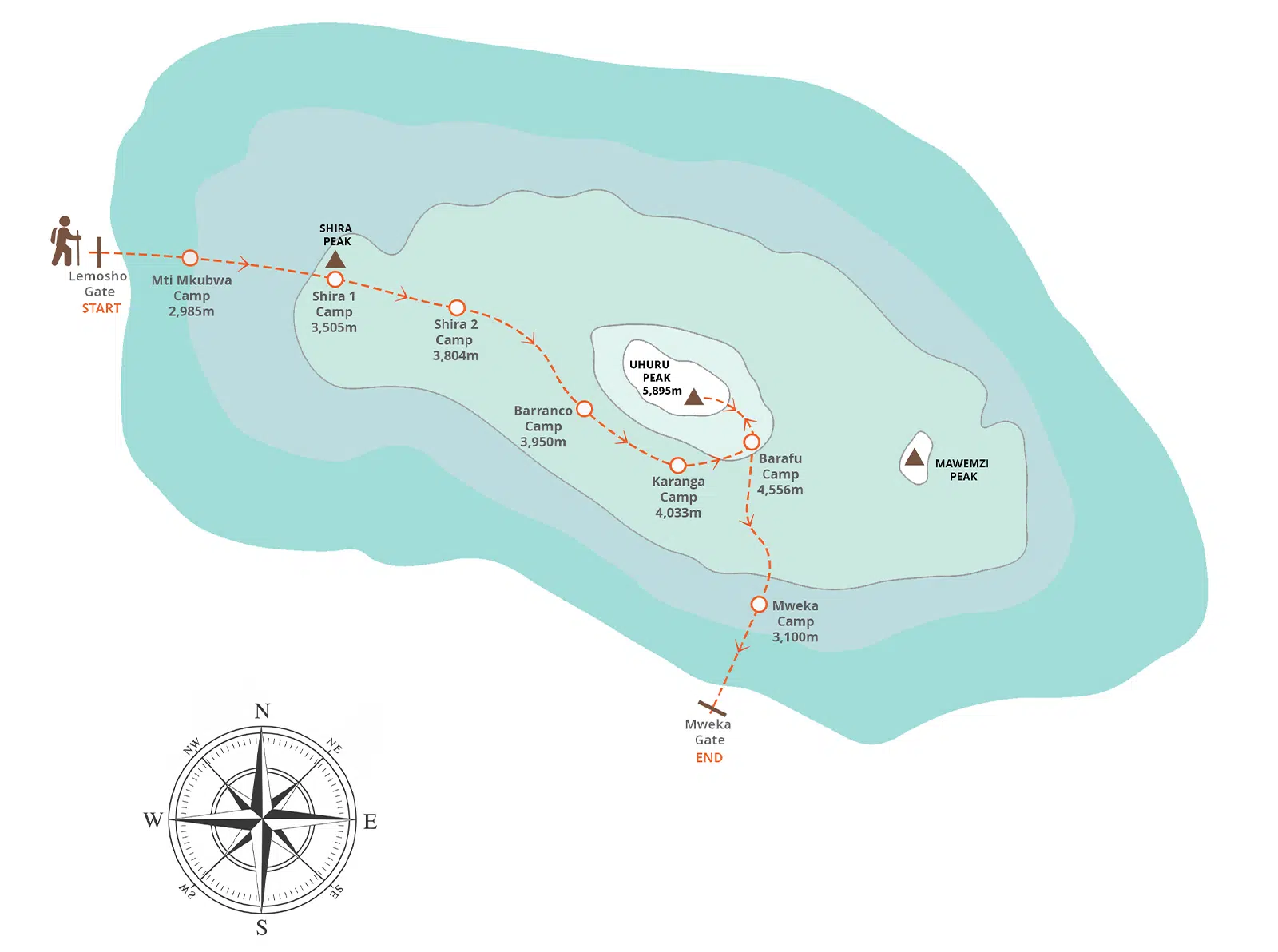
Your journey begins on the western side of Mount Kilimanjaro at Lemosho Gate, where your guides handle registration and provide a detailed pre-climb briefing. Once everything is set, you start trekking through the dense rainforest zone, one of the most beautiful and biodiverse sections of the mountain. The trail is shaded by tall trees covered in moss, and you may hear birds singing while spotting small wildlife such as colobus monkeys. The pace is slow and comfortable, designed to help your body gradually adjust to the altitude. After approximately 3–4 hours of hiking on a gentle trail, you reach Mti Mkubwa Camp (“Big Tree Camp”), where you relax, enjoy a freshly prepared hot meal, and settle into your tent for your first night on the mountain.
After breakfast, you leave the rainforest behind and enter the moorland zone, where the landscape changes dramatically. The vegetation becomes shorter, with giant heathers and open terrain replacing thick forest. As you climb higher, the air becomes cooler and drier, and the trail begins to offer wide, panoramic views of the surrounding valleys. You will also get your first clear glimpses of Kibo Peak in the distance. The hike is steady and takes about 5–6 hours, giving your body more time to adapt to the increasing altitude. By the time you reach Shira 1 Camp, located on the Shira Plateau, you are rewarded with stunning sunset views and a peaceful atmosphere. This is a great place to relax, hydrate, and enjoy your dinner while preparing for the days ahead.
Today is a shorter trekking day, but it plays a very important role in acclimatization. You will walk across the vast Shira Plateau, one of the highest plateaus in Africa, surrounded by unique volcanic formations and open landscapes. The trail is relatively gentle, allowing you to conserve energy while your body continues adapting to the altitude. As you progress, the views of Kibo Peak become clearer and more impressive, reminding you of your final goal. The slower pace of this day helps reduce fatigue and increases your chances of a successful summit. Upon arrival at Shira 2 Camp, you have time to rest, explore the area, and enjoy the peaceful high-altitude environment before dinner.
This is one of the most important days for acclimatization on the entire trek. You begin by ascending gradually toward Lava Tower, reaching an altitude of about 4,630 meters. This is the highest point you will reach before your summit attempt, and some climbers may begin to feel mild altitude symptoms such as shortness of breath or fatigue. After spending some time at Lava Tower for lunch and acclimatization, you descend to Barranco Camp. This “climb high, sleep low” strategy is extremely effective in helping your body adapt to thinner air. The descent takes you through the beautiful Barranco Valley, filled with giant senecio plants and dramatic scenery. When you arrive at Barranco Camp, you can rest, rehydrate, and enjoy one of the most scenic camps on the mountain.
Your day starts with the exciting climb up the Barranco Wall, a steep but manageable section that requires some light scrambling. It is one of the most memorable parts of the Lemosho Route and offers incredible views once you reach the top. Afterward, the trail continues through ridges and valleys before entering the alpine desert zone, where the environment becomes dry, rocky, and exposed. The hike to Barafu Camp takes several hours and requires steady pacing due to the altitude. Once you arrive, you rest, have an early dinner, and prepare your gear for the midnight summit attempt. It is important to sleep early, even if only for a few hours, as the next stage will be the most challenging part of the climb.
This is the most demanding and rewarding day of your Kilimanjaro adventure. You wake up around midnight and begin your summit push under the stars in very cold conditions. The climb is slow and steady as you make your way up steep scree toward Stella Point on the crater rim. From there, you continue along a gradual path to Uhuru Peak, the highest point in Africa. Standing at the summit of Mount Kilimanjaro is an unforgettable and emotional achievement, marking the success of your journey. After taking photos and celebrating, you begin your descent back to Barafu Camp for a short rest before continuing down to Mweka Gate. This long descent marks the end of your climb, where you receive your summit certificate and return to your hotel for rest and celebration.
Price for the 6 Days Lemosho Route Kilimanjaro climbing tour starts from $1,450 USD per person, offering excellent value for one of the most scenic routes with a high summit success rate and full professional support.
This 6 Days Lemosho Route climb on Mount Kilimanjaro is:
Unlike shorter routes, Lemosho provides a stronger acclimatization profile, which is why it is widely recommended for climbers aiming for summit success.
The 6-day Lemosho Route on Mount Kilimanjaro is considered moderate to challenging, mainly due to the high altitude and long trekking days. However, compared to shorter routes, it is more manageable because it allows for gradual altitude gain and includes an important acclimatization day. Climbers typically walk at a slow, steady pace (“pole pole”), which helps reduce fatigue and improve overall performance. With proper preparation, determination, and guidance, many climbers successfully complete this route.
Yes, the Lemosho Route is widely considered one of the best options for beginners attempting Mount Kilimanjaro for the first time. It offers a well-paced itinerary that allows climbers to gain altitude gradually, reducing the physical stress associated with rapid ascents. The route also provides diverse and scenic landscapes, making the experience more enjoyable and motivating. While no technical climbing skills are required, beginners are encouraged to prepare in advance through regular hiking, cardio workouts, and endurance training. This preparation helps improve stamina, confidence, and overall comfort during the climb.
The Lemosho Route has a higher summit success rate primarily due to its excellent acclimatization profile. Climbers ascend slowly and follow the proven “climb high, sleep low” strategy, especially during key stages like the hike to Lava Tower. This approach allows the body to adjust more effectively to reduced oxygen levels at higher altitudes. As a result, the risk of altitude sickness is significantly minimized, giving climbers a stronger chance of safely reaching Uhuru Peak. The longer and more gradual itinerary is a major advantage compared to shorter, faster routes.
No prior mountaineering or technical climbing experience is required to climb Mount Kilimanjaro via the Lemosho Route. It is classified as a non-technical trek, meaning climbers do not need ropes, harnesses, or specialized climbing equipment. However, having some hiking experience and a good level of physical fitness will make the journey significantly easier. Mental preparation is also important, as climbers must be ready for long trekking days, cold temperatures, and high-altitude conditions.
The best time to climb Mount Kilimanjaro is during the dry seasons, which typically occur from January to March and June to October. During these months, the weather is more predictable, with clearer skies, less rainfall, and better trail conditions. These factors improve visibility, safety, and overall comfort on the mountain. Climbing during the dry season also increases your chances of enjoying panoramic summit views and successfully reaching Uhuru Peak.
Unlike the Marangu Route, the Lemosho Route uses camping accommodation throughout the climb on Mount Kilimanjaro. Climbers sleep in durable, weather-resistant mountain tents that are set up and managed by a professional support team. Each campsite includes a dining tent where meals are served, as well as basic facilities to ensure comfort in remote conditions. While it is more adventurous than hut accommodation, the camping experience allows you to fully immerse yourself in the natural beauty of the mountain.
Packing the right gear is essential for a successful climb on Mount Kilimanjaro. You should bring warm layered clothing to handle freezing summit temperatures, waterproof jackets and pants for rain protection, sturdy hiking boots for rough terrain, and a good-quality sleeping bag for cold nights. Other important items include gloves, hats, a headlamp for the summit night, sunglasses, sunscreen, a refillable water system, and any personal medications. Proper gear not only improves comfort but also increases your chances of reaching the summit safely.
Climb Mount Kilimanjaro through the stunning Lemosho Route and experience one of the most scenic and rewarding trekking adventures in the world, with a high summit success rate and professional support every step of the way.
Secure your spot today and join the 6 Days Lemosho Route Kilimanjaro climb from $1,450 USD, including expert guides, full mountain support, and an unforgettable journey to the Roof of Africa.