
The 6 Days Lemosho Route Kilimanjaro Climb is one of the best choices for trekkers seeking a high summit success rate, stunning scenery, and proper acclimatization on Mount Kilimanjaro (5,895m). Known as one of the most beautiful routes on the mountain, Lemosho offers diverse landscapes, fewer crowds at the beginning, and a well-paced ascent profile. Starting from the western side of the mountain, the route gradually joins the Machame trail, allowing climbers to follow the proven “climb high, sleep low” strategy. This significantly improves altitude adaptation and increases your chances of successfully reaching Uhuru Peak, the highest point in Africa. The 6-day itinerary is ideal for climbers who want a balance between time, budget, and summit success, supported by experienced guides and a professional mountain crew.
This package is perfect for those who want:
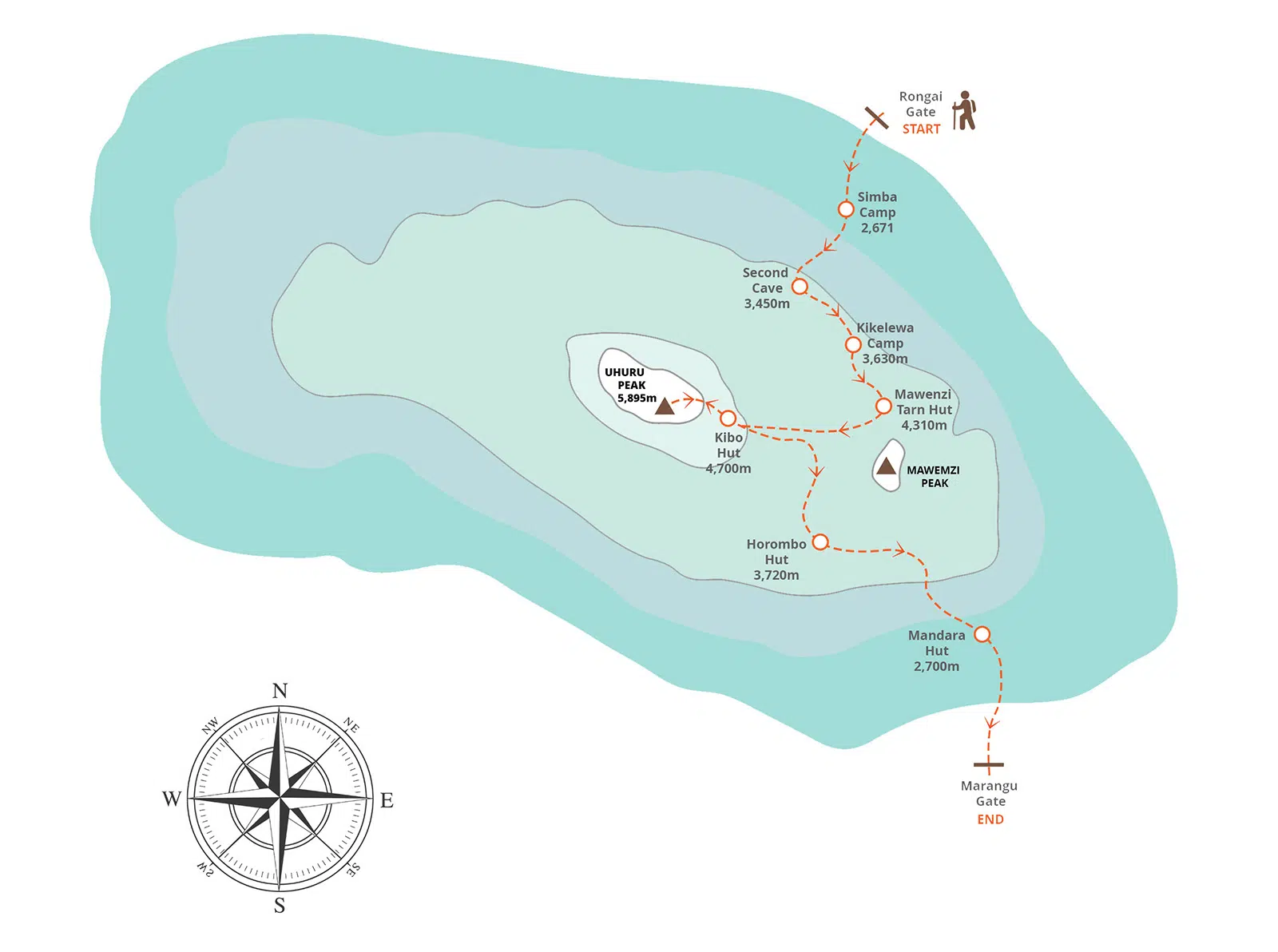
Your Kilimanjaro adventure begins at Lemosho Gate on the western side of the mountain, where your guides complete park registration and provide a full briefing about the trek ahead. After final gear checks, you start your hike through the lush rainforest, one of the most beautiful and biologically rich zones on Mount Kilimanjaro. The trail is shaded by tall trees draped in moss, and the air is fresh and humid, creating a comfortable environment for your first day. As you walk along the gentle path, you may spot black-and-white colobus monkeys swinging through the trees and hear a variety of bird species. The pace is slow and steady, designed to help your body begin adjusting to the altitude without stress. After approximately 3–4 hours of trekking, you arrive at Mti Mkubwa Camp, also known as “Big Tree Camp.” Here, your crew will have your tents ready, and you can relax, enjoy a hot meal, and settle into your first night on the mountain surrounded by nature.
After breakfast, you continue your journey as the trail gradually leaves the dense rainforest and transitions into the moorland zone. This change in landscape is dramatic, with shorter vegetation, giant heathers, and open terrain replacing the thick forest. The air becomes cooler and drier as you gain altitude. The hike takes about 5–6 hours and offers your first panoramic views of the surrounding valleys and distant peaks. On clear days, you will begin to see Kibo Peak, the main summit of Kilimanjaro, rising in the distance a motivating sight for the days ahead. The trail is steady but manageable, allowing you to maintain a comfortable rhythm. Upon arrival at Shira 1 Camp, located on the Shira Plateau, you are rewarded with wide-open views and a peaceful atmosphere. This is a perfect place to relax, rehydrate, and enjoy a warm meal while watching a stunning sunset over the mountain landscape.
Today is a shorter trekking day, but it plays a crucial role in your acclimatization process. You cross the expansive Shira Plateau, one of the highest plateaus in Africa, characterized by open terrain, volcanic rock formations, and unique alpine vegetation. The trail is relatively gentle, allowing you to walk slowly and conserve energy while your body continues adapting to the altitude. Along the way, you will enjoy increasingly clear and impressive views of Kibo Peak, which feels closer with every step. Because the day is less physically demanding, you have time to rest upon arrival at Shira 2 Camp. Many climbers use this opportunity for short acclimatization walks around the camp, which can further improve altitude adaptation. The calm environment and incredible scenery make this one of the most enjoyable days on the trek.
This is one of the most important days for acclimatization and plays a major role in your summit success. You begin by ascending gradually toward Lava Tower, reaching an altitude of approximately 4,630 meters. The landscape becomes more rugged and alpine, with rocky terrain and thinner air. At this altitude, some climbers may begin to feel mild symptoms such as shortness of breath or fatigue, which is completely normal. You stop at Lava Tower for lunch and to allow your body to adjust to the higher elevation. Afterward, you descend to Barranco Camp at 3,960 meters. This descent is key to the “climb high, sleep low” strategy, which helps your body adapt more effectively to altitude changes. The trail down into Barranco Valley is incredibly scenic, filled with giant senecio plants and dramatic rock formations. Barranco Camp is often considered one of the most beautiful camps on Mount Kilimanjaro, offering breathtaking views and a rewarding place to rest after a challenging but important day.
The day begins with the exciting climb up the famous Barranco Wall, a steep but non-technical section that requires some light scrambling. While it may look intimidating at first, it is safe and manageable with the guidance of your experienced crew. Reaching the top rewards you with spectacular views of the surrounding valleys and glaciers. After the Barranco Wall, the trail continues through a series of ridges and valleys before entering the alpine desert zone. The environment becomes drier, rockier, and more exposed, highlighting the harsh beauty of high-altitude terrain. The trek to Barafu Camp takes several hours and requires a steady, slow pace to conserve energy. Upon arrival, you will have an early dinner and time to prepare your gear for the summit attempt. Rest is essential, as you will wake up around midnight for the final push to Uhuru Peak.
Summit day is the most challenging and rewarding part of your journey. You wake up around midnight and begin your ascent under the stars, wearing warm layers to protect against freezing temperatures. The climb is slow and steady, following a zigzag path over steep scree slopes toward Stella Point on the crater rim. From Stella Point, you continue along a gradual ridge to Uhuru Peak, the highest point in Africa. Reaching the summit is an emotional and unforgettable moment, offering incredible views above the clouds and a true sense of achievement. After celebrating and taking photos, you begin your descent back to Barafu Camp for a short rest. You then continue down to Mweka Gate, passing through different vegetation zones as the air becomes richer in oxygen. At the gate, you receive your summit certificate before being transferred back to your hotel for a well-deserved rest and celebration.
Price for the 6 Days Lemosho Route Kilimanjaro climbing tour on Mount Kilimanjaro starts from $1,450 USD per person, making it one of the best-value options for climbers seeking a scenic route with excellent acclimatization, full trekking support, professional guides, and a high summit success rate.
The Lemosho Route is widely regarded as one of the best routes on Mount Kilimanjaro because it offers:
The 6 Days Lemosho Route on Mount Kilimanjaro is considered moderate to challenging, primarily due to the effects of high altitude, long trekking distances, and changing weather conditions rather than technical climbing difficulty. Trekkers will hike for several hours each day, often on steep and rocky terrain, especially as they approach higher elevations. One of the biggest challenges is the reduced oxygen level near the summit, which can cause fatigue and altitude-related symptoms. However, the Lemosho Route is specifically designed with a gradual ascent profile that allows climbers to adjust more effectively. By following a slow and steady pace known as “pole pole,” staying well hydrated, and listening to your guides, most climbers can successfully manage the difficulty and reach Uhuru Peak (5,895m).
Yes, the Lemosho Route is widely considered one of the best Kilimanjaro routes for beginners, especially those attempting their first high-altitude trek. Unlike shorter routes, Lemosho provides more time for acclimatization, which is one of the most important factors in a successful climb. The route begins in a quiet and less crowded area, allowing beginners to enjoy a more relaxed and less pressured start. It also offers incredibly diverse scenery from rainforest and moorland to alpine desert making the journey more enjoyable and motivating. While beginners do not need technical climbing skills, preparing with regular hiking, cardio training, and endurance exercises will greatly improve comfort and confidence during the trek.
The Lemosho Route Kilimanjaro climb is known for having one of the highest summit success rates among all Kilimanjaro routes. This is mainly due to its longer and more gradual ascent, which allows the body enough time to adjust to increasing altitude. A key advantage of this route is the use of the “climb high, sleep low” acclimatization strategy, particularly on the day you hike to Lava Tower before descending to Barranco Camp. This method helps your body adapt to thinner air more efficiently, reducing the risk of altitude sickness. Because climbers are not rushed and have better acclimatization, they arrive at summit day stronger, healthier, and more prepared greatly increasing their chances of reaching the top of Mount Kilimanjaro successfully.
No prior mountaineering or technical climbing experience is required for the Lemosho Route Kilimanjaro trek, as Mount Kilimanjaro is a non-technical mountain. This means you do not need ropes, harnesses, or specialized climbing equipment. However, this does not mean the climb is easy. A good level of physical fitness, stamina, and mental determination is essential. Having previous hiking or trekking experience especially multi-day hikes can be very helpful. Training in advance with long walks, uphill hikes, and cardio exercises will significantly improve your overall experience and increase your chances of reaching the summit.
The best time to climb Mount Kilimanjaro via the Lemosho Route is during the dry seasons, which occur from January to March and June to October. These months provide the most favorable weather conditions for trekking, including clearer skies, lower chances of rainfall, and better trail conditions. During these periods, climbers can enjoy spectacular views, safer paths, and more comfortable trekking conditions. The June to October season is particularly popular due to stable weather, while January to March offers quieter trails and slightly cooler temperatures. Choosing the right season plays a major role in both your overall experience and your summit success rate.
The Lemosho Route is a full camping route, meaning all overnight stays take place in mountain tents set up by your professional support team. These tents are durable, weather-resistant, and designed for high-altitude conditions. In addition to sleeping tents, there is usually a dining tent where meals are served and climbers can relax comfortably. Your crew handles all camp setup and logistics, allowing you to focus entirely on the climb. While camping is more adventurous than hut accommodation (like on the Marangu Route), it offers a more immersive experience in the natural beauty and remote wilderness of Mount Kilimanjaro.
Packing the right gear is essential for a successful Mount Kilimanjaro climb via the Lemosho Route, as temperatures and conditions vary significantly from the base to the summit. You will need layered clothing to adjust to changing temperatures, including thermal base layers, insulating jackets, and a warm down jacket for summit night. Waterproof gear such as a rain jacket and pants is important to protect against sudden weather changes. Sturdy, well-broken-in hiking boots are necessary for comfort and safety on uneven terrain. Other essential items include a high-quality sleeping bag, headlamp for the summit climb, gloves, hat, sunglasses, sunscreen, and a hydration system. Proper packing not only improves your comfort but also plays a critical role in your safety and overall success on Mount Kilimanjaro.
Climb Mount Kilimanjaro via the Lemosho Route and experience one of the most scenic, well-paced, and successful trekking routes to the Roof of Africa. This route is perfect for climbers seeking breathtaking landscapes, excellent acclimatization, and a higher chance of reaching Uhuru Peak (5,895m). With professional mountain guides, full trekking support, and a carefully designed itinerary, your 6 Days Lemosho Route Kilimanjaro climb (2026/2027) offers the perfect balance of adventure, safety, and success.
Secure your spot today and take the first step toward achieving one of the world’s greatest adventures. Price starts from $1,450 USD per person, including expert guides, camping equipment, meals on the mountain, and full professional support throughout your climb.